Best Time to Visit Ladakh: A Practical and Meaningful Travelers Guide
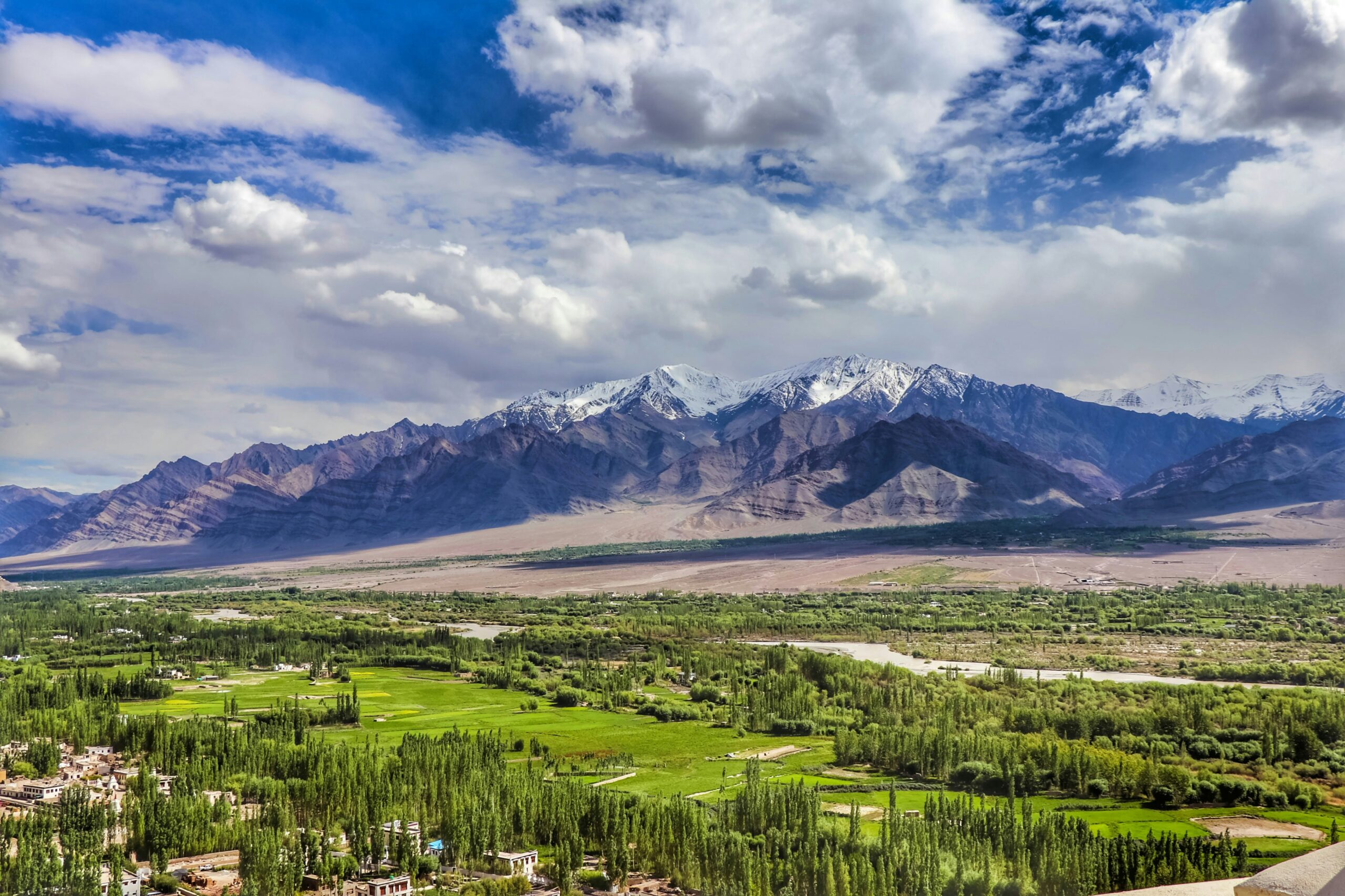
When a Landscape Teaches You Its Own Calendar By Declan P. O’Connor Introduction — Why “Best Time to Visit Ladakh” Is Not a Simple Date Range A Landscape That Teaches You Its Own Calendar For most European travelers, the first question is predictable: “What is the best time to visit Ladakh?” It sounds like a purely practical query, the sort of thing a search engine should answer with a neat bullet list and a couple of temperature charts. Yet the more time you spend in Ladakh, the more that question begins to feel slightly wrong, as if it were asked in the wrong language. The region does not behave like a typical destination: it resists being squeezed into a simple high-season or low-season diagram because altitude does not just change the climate; it changes you. The thin air, long horizons, and bright, spare light turn each month into a different kind of inner conversation. If you insist on a short answer, you can say that the best time to visit Ladakh is usually between June and October, when the roads are open and the weather is broadly stable. But a traveler who only hears that answer misses the deeper truth. June sunlight feels different from October’s sharp clarity. Winter silence carries a weight that July’s buzzing trails never will. To ask about the best time to visit Ladakh, then, is really to ask: What kind of traveler do I want to be, and what kind of landscape do I want it to reveal? That is the question this guide will try to answer, with equal attention to road conditions and to the quieter seasons of the soul. Why European Travelers Keep Asking About the Best Time to Visit Ladakh For European travelers, the logistics are not trivial. Taking a week or two off work, committing to a long-haul flight to India, and adding another domestic leg to reach Leh means that the best time to visit Ladakh is never a casual consideration. You worry about whether the high passes will be open, whether the treks will be safe, whether the monsoon will interfere with internal flights. You check school holidays, try to match your annual leave to a window of decent weather, and perhaps feel a little guilty about the carbon footprint of your journey. In that context, the phrase “best time to visit Ladakh” becomes a kind of moral and logistical filter: you want the journey to be worth it, to feel both responsible and deeply meaningful. This guide takes those concerns seriously but refuses to stop at the surface level. Yes, we will talk about open roads, reliable temperatures, and which months are realistic for first-time visitors. But we will also linger over the emotional weather of each season: the green optimism of July, the golden nostalgia of October, the austere peace of February. The best time to visit Ladakh is not a single date circled on a calendar; it is a moving intersection between your inner life and the plateau’s own slow, unwavering rhythm. The task is not simply to pick a month but to choose a mood—and allow that choice to change you. Four Ways to Read Ladakh’s Seasons as a Traveler Altitude, Light, and the Four Emotional Seasons Before we begin talking about months and itineraries, it helps to understand how altitude reshapes the idea of a year. In most temperate European climates, winter, spring, summer, and autumn are defined by familiar patterns of temperature, rain, and daylight. In Ladakh, the altitude and geography sharpen those patterns into something more dramatic. Summer is not just warm and pleasant; it is the brief season when the high passes open, the villages are fully alive, and the network of roads turns the region into one connected world. Autumn is more than cooling weather; it is an almost spiritual clearing of the air, with long shadows and a kind of distilled calm that makes even a short walk feel contemplative. Winter, on the other hand, strips the landscape back to essentials. The best time to visit Ladakh for snow leopard tracking is often mid-winter, when the cold tightens its grip and the wildlife follows predictable paths along frozen rivers. Early spring is a season of half-frozen streams, thawing fields, and subtle colour shifts rather than dramatic blossoms. If summer is when Ladakh throws its doors wide open, winter is when the house is quiet and only a few guests remain by the fire. Understanding these four emotional seasons—open, distilled, stripped back, and reawakening—helps you see that the question of the best time to visit Ladakh is really a question of which emotional season you are seeking. Roads, Rivers, and What “Open” Really Means The map you consult at your desk in Berlin or Paris is deceptively simple: a line from Manali to Leh, a line from Srinagar to Leh, branches off toward Nubra and Pangong. On a screen, the best time to visit Ladakh looks like the season when those lines are not covered in snow. But on the ground, “open” is not an absolute state. Roads may be officially open but subject to landslides, sudden snowfall, or temporary closures. Streams that are charming in June can turn treacherous after heavy rain. A village that feels bustling in August may be almost silent in late October, even if the road technically remains passable. This is why local operators and drivers speak about the best time to visit Ladakh with nuance. They may say that July is comfortable for most travelers but gently discourage ambitious high treks in early June if the winter has been heavy. They may praise September as “the best time to visit Ladakh for serious trekkers,” thanks to clear skies and dry trails, while warning that some high camps will be much colder than visitors expect. The rivers and roads, in other words, form a second calendar beneath the official one. A wise traveler pays attention to both and chooses their own best time to visit Ladakh at the intersection of openness, safety, and the kind of experience they desire. Summer (June–August): Open Roads, High Trails, Clear Horizons Why Summer Is the Most Popular Time to Visit Ladakh For many visitors, especially first-timers from Europe, summer is simply the best time to visit Ladakh. From roughly June to August, the famous highways into the region are typically open, and the internal roads to Nubra and Pangong are at their most reliable. The days are long, the temperatures in Leh are comfortable, and most classic treks are feasible without specialist winter equipment. If you are travelling with limited time—or if your idea of the best time to visit Ladakh includes easy logistics, a wider choice of accommodation, and a sense that the whole region is accessible—summer provides all of that. It is the moment in the year when Ladakh feels most like a connected archipelago of valleys and passes rather than a scattered set of isolated pockets. Of course, popularity has its price. The best time to visit Ladakh for solitude is not necessarily July, when trails can become busy and viewpoints crowded. Yet even in summer, Ladakh’s vastness allows for escape. A slightly longer trek, a willingness to stay in simpler homestays rather than the most fashionable camps, or the choice to wake early and walk before the jeeps arrive can restore a sense of quiet. Summer at altitude is not a theme park; it is a short window of possibility. The more you understand that, the more you can use the region’s openness to shape a journey that still feels personal, thoughtful, and rooted in the landscape rather than in the schedule of other people’s tours. The Emotional Weather of Ladakh’s Summer Months Summer in Ladakh is not just a matter of sunshine and blue skies. There is a particular emotional atmosphere that hangs over the high valleys when the snow has retreated and the fields are fully green. Villages are busy with work: irrigation channels are running, barley is growing, and children walk to school in the early light. For a European visitor, the best time to visit Ladakh in summer is often the moment when this everyday life becomes visible. You may find yourself sitting on a low wall in the evening, watching the last light spread across a ridge while a family finishes their chores in the fields below. The air is cool but not yet biting; the sky is wide enough to hold whatever questions you brought with you from home. In this emotional weather, the best time to visit Ladakh is less about a specific date and more about the days when you allow your itinerary to loosen. You might skip one viewpoint in favour of lingering in a village courtyard or spend an extra night on a trek because a conversation with your hosts feels unfinished. Summer encourages that kind of small rebellion against efficiency. The plateau seems to say: if you have come all this way, do not rush through. In that sense, the best time to visit Ladakh in summer is whenever you give yourself permission to move one step slower than your schedule demands. Autumn (September–October): Golden Fields and Slower Footsteps Autumn as the Photographer’s and Thinker’s Season Ask guides and repeat visitors and many will quietly confess that, for them, the best time to visit Ladakh is not high summer but early autumn. In September and early October, the air turns crisper, the crowds thin, and the fields shift from green to gold. The light becomes sharper, shadows longer, and colours more subtle. For photographers and contemplative travelers, this combination can be irresistible. You still enjoy mostly stable weather and relatively open roads, but the region feels less like a busy junction and more like a series of intimate rooms. In terms of mood, the best time to visit Ladakh for reflection and photography is often this shoulder season, when the urgency of summer has passed and the first reminders of winter are quietly settling in. Practically, the best time to visit Ladakh for demanding treks often overlaps with this autumn window. Trails are drier, river crossings lower, and afternoon clouds less dramatic than in the peak of summer. Nights are colder, but t
source https://lifeontheplanetladakh.com/blog/best-time-ladakh-guide/


Comments
Post a Comment