Ladakh Packing List: Essential Gear for High-Altitude Desert Travel
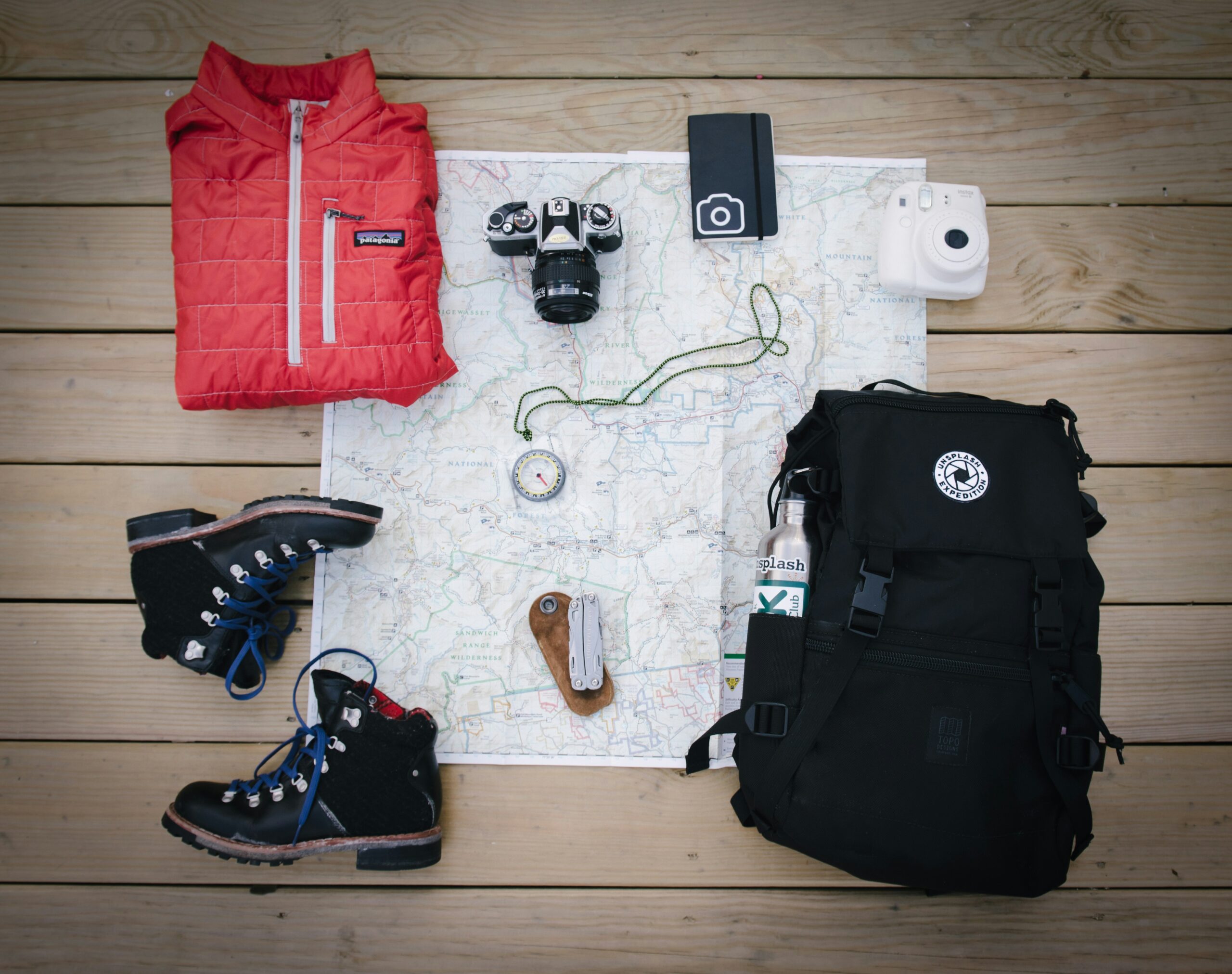
What You Carry Determines How You Travel in Ladakh By Declan P. O’Connor Introduction — Packing Not for Efficiency, but for Clarity Why Ladakh punishes the unprepared and rewards the thoughtful In most destinations, a forgotten layer or an imperfect pair of shoes is an inconvenience. In Ladakh, it can quietly rewrite the entire arc of your journey. A place shaped by altitude, dryness, and dramatic swings in temperature does not argue with you; it simply reveals, hour by hour, whether you were honest with yourself when you packed. A good Ladakh packing list is therefore not a shopping exercise. It is a small moral test of how seriously you take your own limits and how much respect you offer the mountains you are entering. From the alleyways of Leh to the wind-scoured high passes and stark river valleys, you are always a little exposed. The sun at 3,500 metres burns more fiercely, even when the air feels cool. The shade after sunset cuts more sharply than you expect, even in July. Any gap in preparation gets amplified. The jacket you decided to leave at home because it felt “too much” becomes the missing piece between a quiet, contemplative evening and a long, shivering night where all you can think about is getting back to a heated room in the city. The paradox is that the better you pack, the lighter you feel. Not because you bring everything, but because you bring the right things. Each layer, each small piece of gear, buys you a little more mental space: the freedom to pay attention to clouds gathering over a ridge instead of obsessing about whether your socks will dry by morning. The right Ladakh packing list is, in this sense, an instrument of attention. It frees the mind to notice the colour of apricot blossoms in a village courtyard, the sound of prayer wheels turning in a monastery, the way thin air slows not only your steps but also your thoughts. Ladakh punishes the unprepared not out of cruelty but out of consistency. It rewards the thoughtful because thoughtfulness, expressed as good preparation, allows you to move more slowly, to accept the pace that altitude demands. In a world that constantly asks you to travel faster, this high-altitude desert invites you to bring only what you truly need and then to discover, with some surprise, that what you truly need was never very much—but it had to be chosen carefully. The High-Altitude Logic: How to Think About Packing for Ladakh Altitude, dryness, and the moral weight of “carrying less but better” To build a meaningful Ladakh packing list, you first have to understand the logic of the landscape. Altitude thins the air, which means that every kilo you lift feels heavier and every careless decision echoes further down the trail. The dryness pulls moisture from your skin and lungs with steady insistence. Heat and cold take turns in a daily choreography: harsh sun at midday, biting chill after twilight. Your body will adapt, but it will adapt more gracefully if your gear is chosen with humility rather than bravado. The instinct in unfamiliar conditions is to overpack. You imagine every worst-case scenario and try to insulate yourself against them with gadgets and “just in case” items. Yet the higher you go, the more this instinct betrays you. A heavy, cluttered bag forces you into shorter steps, robs your breath, and makes every climb feel punitive. Excess becomes its own kind of risk. The ethical question is not simply “Do I have enough?” but “Have I brought so much that I can no longer move with care?” Here the idea of “carrying less but better” becomes a quiet discipline. You select one shell that truly blocks the wind, rather than three mediocre jackets. You choose base layers that actually wick, rather than a stack of cotton t-shirts that will cling and chill. You invest in a headlamp that works at altitude instead of relying on your phone torch and its fragile battery. Each deliberate choice lightens the pack and, more importantly, lightens the mind. When you know your gear will perform, you are no longer haunted by doubt every time the weather changes. In the stillness of a Ladakhi evening, when the sky darkens into a field of improbable stars, you begin to feel the moral dimension of these choices. By carrying less, you have spared your own joints and lungs. By carrying better, you have avoided the frantic consumer impulse to throw equipment at your fears. This is not heroism; it is simply a kind of grown-up honesty. A well-considered Ladakh packing list becomes an exercise in modesty: trusting that you can live with a few well-chosen things, and that your comfort will come not from abundance but from coherence. Somewhere between the airport in Leh and the first high ridge you climb, you may notice that your relationship to possessions is being edited. You do not need five outfits; you need one that dries quickly. You do not need a suitcase of entertainment; you need the capacity to be bored, then attentive, then quiet. Packing, in other words, is not separate from the journey. It is the opening chapter in a story about how you are willing to live when the landscape no longer bends to your habits. Seasonal Packing Lists — Because Ladakh Has Four Different Personalities 1. Summer (June–September): Heat at noon, winter at night For most travellers, summer is the season when Ladakh first appears on the horizon of possibility. Roads are open, passes are clearing, and social feeds fill with images of blue skies and luminous monasteries. It is easy, in this flood of colour, to imagine that a light jacket and optimism will be enough. A serious Ladakh packing list for summer, however, has to accommodate a daily pendulum swing between intense solar heat and unexpectedly cold nights. During the day, the sun at high altitude behaves like a magnifying glass. Temperatures on exposed slopes can feel almost Mediterranean, even as the air remains thin and dry. Here, your first layer of protection is not your down jacket but your discipline. A wide-brimmed hat, high-SPF sunscreen, sunglasses with UV protection, and a long-sleeved, breathable shirt are not optional accessories; they are the armour that prevents your energy from leaking away through sunburn and dehydration. A good summer packing list in Ladakh begins, counterintuitively, with shade. Then evening arrives, and the performance changes. As soon as the sun drops behind the ridgeline, warmth drains out of the air at unsettling speed. Campgrounds that felt almost hot at three in the afternoon can feel alpine by eight o’clock. This is where your mid-layers and light insulation matter. A fleece or light synthetic jacket for early evening, and a compact down or synthetic puffer for later, create a ladder of warmth you can climb as the temperature falls. Add a warm hat and simple gloves, and suddenly the stars are something to enjoy rather than endure. The psychological benefit of this seasonal preparation is hard to overstate. When you know you have the layers to meet both the noon sun and the midnight chill, your day is no longer framed by anxiety. You can linger a little longer in a village courtyard, watching children play and elders gossip, without constantly calculating how quickly you need to retreat indoors. Your attention is released from your own discomfort and can rest instead on the texture of the place. A thoughtful summer Ladakh packing list is, in this sense, a tool for expanding the amount of reality you are able to notice. 2. Autumn (Late September–October): Crisp air, colder nights Autumn in Ladakh is a season of clarity. The air turns sharp and clean, the light grows more golden, and the valleys, briefly, feel both quieter and more intimate. It is also the season when underestimating the cold can turn what should be a contemplative journey into a grim endurance exercise. A responsible Ladakh packing list for autumn accepts that you will be comfortable only if your clothing system treats every evening as potentially wintry. Daytime can still be moderate, especially in the sun, but the overall temperature profile has shifted. You are no longer managing intense heat; you are managing a prolonged flirtation with cold. A proper three-layer system becomes non-negotiable: a moisture-wicking base layer, an insulating mid-layer (fleece or light synthetic), and a windproof, preferably water-resistant outer shell. This doesn’t have to look like an expedition kit, but it does need to function like one. The wind in October has teeth, and any weakness in your layering will be exposed. Nights, meanwhile, can be genuinely cold, particularly in higher villages and camps. A heavier down jacket or a thicker synthetic parka begins to make sense, not as an indulgence but as a guarantee of sleep. Warm sleepwear, thick socks reserved only for the tent, and perhaps a silk or fleece sleeping bag liner can transform a long night from seven hours of shivering into seven hours of actual rest. The difference this makes to your mood the next day is immense. Exhausted travellers see less, care less, and remember less. Well-rested ones have the capacity to notice the quiet details that make autumn in Ladakh so haunting: harvested fields, prayer flags snapping in colder wind, the sense of a landscape preparing for its long winter. There is, again, a moral subtext here. To pack seriously for autumn is to admit that you are not invincible, that you will be happier and kinder to those around you if you are warm enough. A good Ladakh packing list for this season does not aim for heroism or minimalist bragging rights. It aims for steadiness: the ability to greet each day without resentment towards the cold and each evening without dread. That steadiness becomes, almost imperceptibly, a form of inner spaciousness, a quiet mind that is free to register both the grandeur and the fragility of this high-altitude world. 3. Winter (November–March): The desert becomes arctic In winter, Ladakh reveals a more s
source https://lifeontheplanetladakh.com/blog/ladakh-packing-guide/


Comments
Post a Comment