Ladakh Travel Tips: What Every Traveler Needs to Know Before Arriving
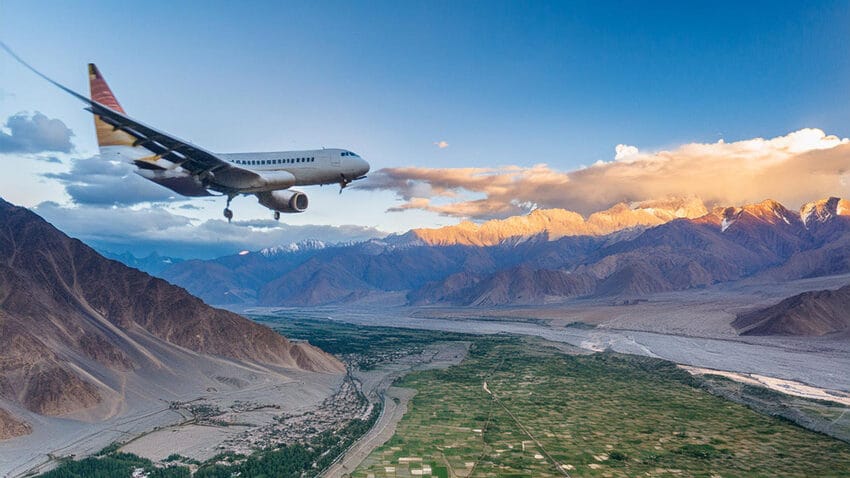
The Quiet Demands of a High-Altitude Civilization By Declan P. O’Connor Introduction — The Difference Between Travel Advice and Paying Attention Why “Ladakh Travel Tips” Are Not Just Another Checklist Every European traveller has read a hundred articles that promise “essential travel tips” before they even open their browser. They blend together: what to pack, how much cash to carry, which apps to download. It is tempting to file Ladakh under the same mental folder, as if a short list of Ladakh travel tips were simply another checklist to scroll through on the way to the airport. But the moment you start preparing for a journey into high-altitude India, the ordinary logic of travel advice begins to fray at the edges. You realise this is not just a different place; it is a different way that place, time and body relate to one another. Ladakh asks more from you than a quick glance at a packing list. It invites you to reconsider the assumptions behind how you usually travel. At sea level, you can treat your body as something that quietly cooperates in the background. You can over-schedule, rush from train to museum to restaurant, and still tell yourself you are “making the most” of your days. At 3,500 metres and above, that illusion disappears. The most important Ladakh travel tips are not about how to squeeze more in, but how to surrender to less. Less rushing, fewer expectations, more humility before a landscape that does not negotiate. To arrive in Ladakh with only information is to arrive half-prepared. The other half is a kind of interior adjustment: a willingness to let your heart rate, your itinerary and even your sense of achievement be redefined by altitude. This guide gathers practical Ladakh travel tips, of course, but it does so in service of something deeper: helping you become the kind of traveller this region deserves, long before your plane begins its descent into Leh. The European Itinerary Meets a Himalayan Timescale European travel culture loves the itinerary that reads like a résumé: so many cities, so many sights, so many nights. We measure value in movement, in how many borders we cross, in how efficiently we convert days of annual leave into a sequence of photographs. When those instincts meet Ladakh, there is friction. The mountains do not care that you have only ten days off. The roads do not care that you have bookmarked three valleys and two lakes. Your red-eye flight and your colour-coded schedule are irrelevant to the thin air waiting for you at the top of the first small hill in Leh. That is why honest Ladakh travel tips sound almost subversive to a European ear. They say: fly in, and then do almost nothing for the first forty-eight hours. They say: resist the urge to book a high pass, a remote valley and a famous lake all within two days of landing. They say: measure your visit not in how far you go, but in whether you can still sleep, breathe and think clearly by the end of the week. It feels like a rebuke to everything you have been taught about “getting the most” out of a trip. Yet this slowing is not a punishment; it is an education. The most reliable Ladakh travel tips are a quiet campaign against your own impatience. They are not trying to limit you; they are trying to keep you present, conscious and well enough to understand where you are. To prepare for Ladakh is to accept that efficiency is not the highest value here. Survival, respect and attentiveness come first, and the rest of your journey must be built upon them. Understanding Ladakh Before You Arrive A Land Where Geography Shapes Behavior On a map, Ladakh looks like a remote corner of northern India, a high-altitude plateau squeezed between ranges whose names you might vaguely remember from school. On the ground, it quickly becomes clear that geography here is not background; it is the organising principle of everything. Villages cling to narrow ribbons of green along rivers because water, not convenience, determines where people may live. The sun’s angle decides when fields can be worked, and the freeze of winter decides when roads and passes slip out of use as if swallowed by another season. Meaningful Ladakh travel tips begin with this admission: you are entering a place where geography still wins every argument. It decides how long journeys take, how much food can be grown, how communities trade and how monasteries anchor themselves to cliffs above the valley floor. To Europeans accustomed to trains that depart by the minute and motorways that simply carve through the landscape, this can feel like stepping back into an earlier chapter of history. But for the people who live here, it is simply the grammar of daily life. When a local driver says a road will open “if the weather allows,” he is not being evasive; he is speaking a truth that has governed generations. When itineraries must bend because a pass has closed, it is not a failure of planning; it is geography asserting itself once again. The most honest Ladakh travel tips do not tell you how to overcome this reality. Instead, they tell you how to fall into step with it, to accept that in this corner of the Himalaya, the landscape is the first authority, and humans are still wise enough to listen. The Thin Air That Slows You—And Why That’s Good To understand Ladakh, you must first understand what altitude does to the human body. Not in the abstract, but in the mundane details: the shortness of breath when you climb a few stairs, the mild headache that appears after an afternoon walk, the way your sleep becomes lighter and more restless. These are not signs of weakness or failure; they are signals that your body is trying to negotiate a new contract with the air itself. Any set of Ladakh travel tips that ignores this is not only incomplete, it is dangerous. For many travellers, the instinct is to treat these sensations as obstacles to be pushed through. We drink another coffee, take another tablet, insist that we are fine. But the thin air here is not asking if you are strong enough; it is asking whether you will listen. Authentic Ladakh travel tips insist on the opposite of bravado: hydrate more than you think you need, rest before you feel exhausted, give your body days—not hours—to adjust. The reward for this patience is not merely the absence of altitude sickness, but the presence of a slower, deeper experience of the place. There is a hidden gift in this vulnerability. When you cannot rush, you begin to notice. The way the light moves across the mountains during a single, unhurried afternoon. The rhythm of prayer flags in the afternoon wind. The pace at which locals walk, unhurried yet purposeful. In that sense, the thin air does not simply slow you; it recalibrates you. It takes the European habit of consuming destinations and quietly replaces it with a more honest, more fragile, more human way of being somewhere. Why Distances Are Measured in Time, Not Kilometers Ask a Ladakhi driver how far it is to a particular village, and you are unlikely to receive an answer in kilometres. You will hear instead about hours, about passes, about whether there is fresh snow or old ice, about whether the army convoy has moved that morning or not. This can feel imprecise to a traveller used to mapping apps and estimated arrival times. Yet it is one of the most revealing Ladakh travel tips you can absorb before arrival: distance here is a negotiation with conditions, not a simple matter of numbers on a road sign. The same route can be three hours on a clear day and six on a troubled one. Landslides, roadworks, sudden weather changes—these are not exceptions but recurring characters in the story of the road. When you plan your journey through Ladakh using only kilometres and driving speeds, you are planning for a world that does not exist here. To make peace with this is not to lower your standards; it is to align your expectations with reality. Those who do so find that their frustration softens into curiosity. The journey becomes less about “making good time” and more about seeing what time reveals. Perhaps the most counterintuitive piece of Ladakh travel advice is this: build emptiness into your schedule on purpose. Leave margins between destinations that feel almost wasteful when you look at the map. Those margins will be filled not only by delays, but by unplanned stops, roadside tea, conversations translated three ways, and sudden vistas that demand more than a quick photograph through the window. In a landscape where distance is measured in hours of attention, not in digits on a dashboard, this is not indulgence. It is the only way the journey makes sense. Crucial Travel Tips Every Visitor Should Know Before Landing in Leh The First 48 Hours: What To Do, What To Avoid The most generous thing you can do for your future self in Ladakh is to underachieve during your first forty-eight hours in Leh. This is the opposite of how many Europeans are used to travelling. We tend to treat the first day as an opportunity to “get a jump” on sightseeing, to start earning the sense that we are using our time well. In Ladakh, the most responsible Ladakh travel tips all tell you the same story: the first two days are not for conquering altitude, but for introducing yourself to it. That introduction is simple but not glamorous. Drink more water than feels natural, and add warm herbal tea to the rotation. Walk slowly through the town, noticing how your breath responds to the mild inclines, and be honest when fatigue arrives sooner than you expect. Eat light meals, favouring soups and simple dishes over heavy feasts. Sleep whenever your body suggests it might be a good idea. It is tempting to treat these practices as optional “nice-to-haves,” but they are, in fact, the foundation on which the rest of your Ladakh travel tips quietly depend. Equally important is what you avoid. Do not rush to book a same-day drive over a high pass or an aggressive hike just
source https://lifeontheplanetladakh.com/blog/ladakh-travel-tips-guide/


Comments
Post a Comment