Pilgrims of the Network Age
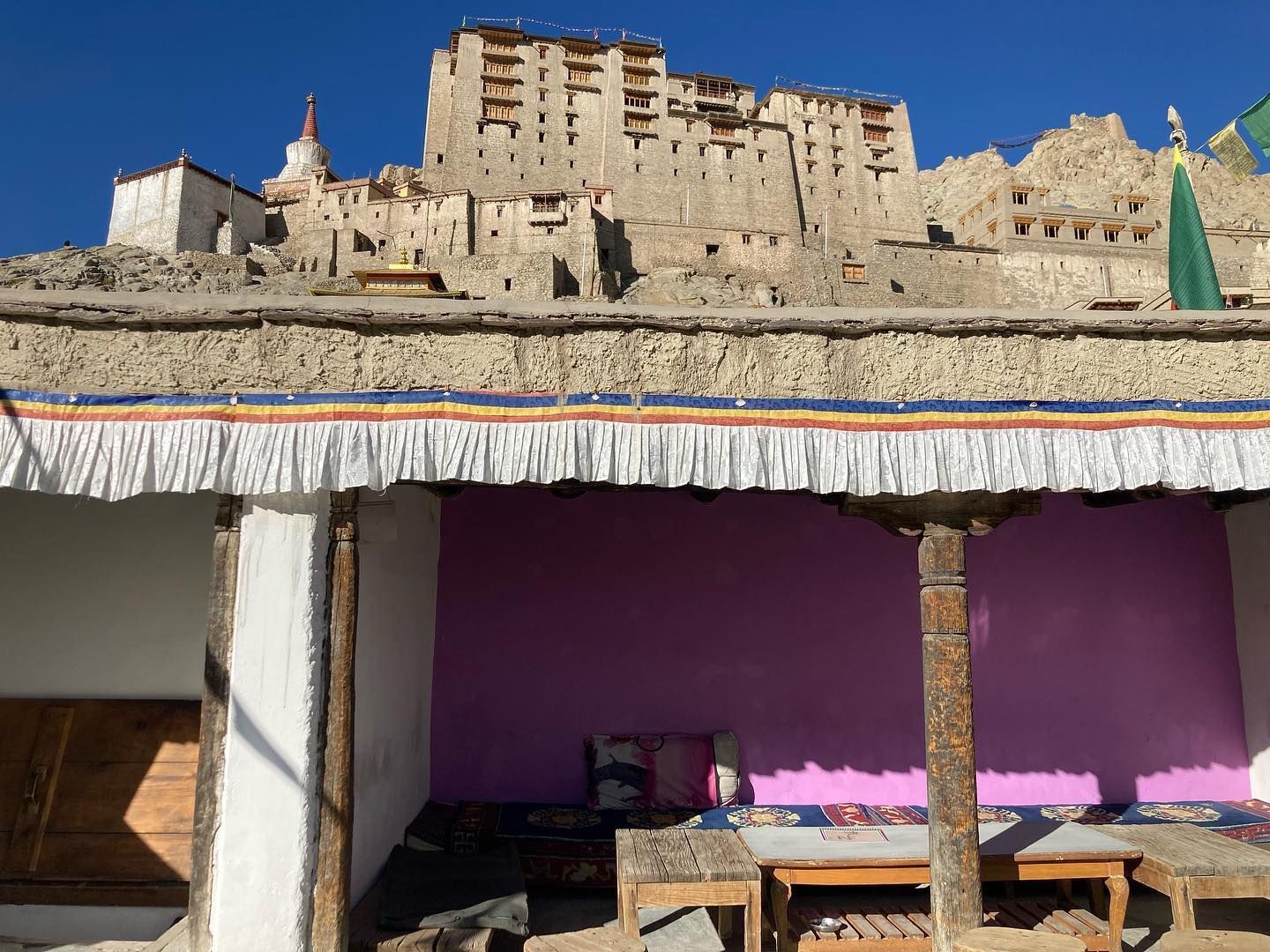
When Connection Becomes a Form of Exile By Declan P. O’Connor Introduction — The Age of the Digital Pilgrim The Map Is Not the Mountain, and the Feed Is Not the Soul We live in an era that confuses velocity with depth and notification with meaning, and the phrase “Pilgrims of the Network Age” names a paradox that many European travelers quietly recognize: we leave home to widen attention yet carry with us a pocketable, glowing home that narrows it. The flight descends into clean air, wind pushes across a high valley, and still the reflex remains—to verify, to post, to triangulate the reality in front of us against a chorus of distant replies. A pilgrim, of course, is a traveler who accepts limits as tutors; a networked person is a traveler who treats limits as bugs to be patched. Ladakh, with its edges of stone and its measured silences, turns this difference into a daily exam. Signals fade, and with them, the small sedations of habit. You begin to notice how often you use the network as an anesthetic against uncertainty: the urge to check a route rather than ask a stranger, to capture a view rather than feel bewildered by it, to outsource wonder to an audience in order to avoid being changed by it yourself. The remedy is not nostalgia; it is proportion. We do not put away the phone because it is evil; we put it away because it is imprecise at altitude, where reality is more granular and the cost of inattention rises. “Pilgrims of the Network Age” do not renounce tools; they refuse to let tools narrate the trip, and they practice a form of presence in which attention—not verification—becomes the primary proof that a day has happened. A Practical Case for Presence Over Performance Presence sounds like a soft virtue until you test it against altitude. Breath grows expensive, and with it discernment: which words are necessary, which steps are reckless, which feelings are merely the body asking for water, shade, salt. In this arithmetic the network often plays the wrong instrument; it offers volume when you need pitch. Thus a practical rule emerges for Pilgrims of the Network Age: schedule connectivity the way you would schedule caffeine—deliberately and briefly—so that the rest of the day belongs to slower faculties. A second rule: treat questions as tickets that must be earned with observation. Look longer, ask later. A third: replace the reflex to broadcast with the discipline to annotate, keeping a paper notebook for things that should mature before they are shown. These are not performances of purity. They are basic safety and basic courtesy in a landscape where a minute of careless attention can become a day of repair. The outcome is not merely aesthetic; it is ethical. When you belong to the place you are in—rather than to the audience that waits elsewhere—you make fewer demands, you listen more fully, and you give back in the coin that matters here: time, patience, and a willingness to be a guest rather than a consumer of scenes. The Lost Art of Disconnection Why Arrival Requires a Ritual of Leaving Every arrival contains a leaving. The traveler who reaches a high valley with twenty browser tabs still open has not arrived; he has relocated his scrolling. Disconnection, then, is not a luxury but a rite—an intentional exit from the lowland habits that smuggle noise into every minute. The rite is plain: airplane mode by default, scheduled check-ins at the day’s edge, and an agreement with companions that conversation has priority over coverage. The immediate effect is unease; the deeper effect is recovery. Unease comes from surrendering the illusion that certainty is always available on demand. Recovery comes when the senses, freed from the tyranny of equivalence, begin to rank experiences again: the cold cup of tea that becomes sufficient, the long shadow that communicates time without a clock, the tone of a villager’s voice that says more than a sentence translated by an app. The Pilgrims of the Network Age are not saints of silence; they are simply travelers who understand that places like this are heard more clearly at lower volumes, and that a day spent off-grid is often a day spent in tune with the basic negotiations—weather, labor, hospitality—that make remote life coherent. The Ethics of Unavailability Availability has become a secular virtue in Europe’s cities, a way of signaling usefulness and care; yet in remote places, constant availability can be a vice, because it tempts you to serve an elsewhere at the expense of the here. Unavailability, practiced within reasonable safety, is a courtesy offered to the host landscape and to the people who must live with it after you leave. The ethics are modest: keep your promises, but make fewer of them; answer messages, but not immediately; choose questions that need a person rather than a search bar; accept that some information is supposed to be an encounter, not a result. Paradoxically, these restraints enrich the trip. You become the kind of guest who participates in the rhythms already in progress rather than the kind of consumer who requires a place to improvise itself around your timeline. In this small way, disconnection becomes a form of respect. It declares that what is happening in front of you deserves your undivided competence—in footwork on a scree slope, in patience when a road closes, in quiet when a ceremony passes by. To be briefly unreachable is to be properly present, and present people make fewer mistakes. Wi-Fi and the Weight of Solitude Loneliness, Chosen and Otherwise Modern loneliness is often an ambient condition rather than an event. The network fights it by keeping us lightly accompanied at all times; solitude fights it by forcing companionship with reality. At altitude, that companionship can be bracing. You may find yourself walking a ridge with the Indus a silver line below, the wind etching patterns you cannot name across dust, and a sudden awareness that there is no one to confirm how you should feel about any of it. This is the moment many of us fear and therefore avoid with small, compulsive messages to distant friends. But chosen solitude has its own medicine. It slows the impulse to outsource interpretation, and it rehabilitates the interior instruments—memory, judgment, gratitude—that become dull when everything must be shared to be verified. For Pilgrims of the Network Age, the test is simple: can you keep company with a place without asking a stream of absent people to keep company with you in it? The reward is equally simple: a thicker quiet in which motives become visible and some of them, frankly, retire from service. Evenings lengthen. Meals taste like reprieve. The day ends with fewer artifacts and more comprehension. Presence Outweighs Signal Presence is not mysticism; it is logistics with moral implications. It looks like this: you put the phone away during a conversation with an elder who remembers winters before roads and summers before tin roofs; you ask two questions and then none; you let pauses do their work. Physiologically, presence lowers pulse and makes attention cheaper to buy back when it wanders. Ethically, it apportionates courtesy toward the people who will still be here when your flight leaves. Practically, it leads to better outcomes: clearer directions, more realistic estimates of time, fewer avoidable errors. When the signal returns, the instinct to narrate every detail tends to have weakened, replaced by a slower satisfaction that what mattered has already been witnessed. Pilgrims of the Network Age do not become hermits; they become companions who are not split between two theaters. They belong to the room they occupy, and this belonging protects both the guest and the host from the strange rudeness of partial presence that modern life too often normalizes. The New Pilgrimage: Data and Devotion Faith Without Religion, Ritual Without Theater Many arrive without a creed and leave with something adjacent to one, not conversion but orientation. The practices are simple and portable: walking before breakfast, carrying less than convenience suggests, reserving an hour for reading something older than the day’s news, writing a page by hand before sleep. None of this requires metaphysics, though it is compatible with it; it requires proportion—the sense that effort should match reward and that rewards at altitude tend to be modest and uninflated by audience. In this frame, a cup of salty tea after a long climb recalibrates luxury; a patch of shade becomes a civic institution; a stranger’s guidance bears more authority than an anonymous review. Pilgrims of the Network Age adopt these rituals not to posture as purists but to keep company with the discreet forms of grace that remote life still offers: endurance without complaining, competence without advertisement, kindness without a performance note attached. Rituals remain rituals because they are repeated; they become devotion when repetition changes the one who repeats them. The Algorithm Is a Poor Confessor Our devices can predict our preferences with unnerving accuracy and yet cannot tell us why restlessness persists after every preference is indulged. That is because algorithms excel at recognition and fail at absolution. Feeding them more of yourself will not reconcile you to yourself. Evenings at altitude make this failure easier to see. As the light goes cool and the air sharpens, the urge to consult the feed presents itself as a craving for fellowship; often it is a fear of being left alone with the inventory of the day—what you did well, what you broke, whom you misunderstood. Try a different sequence. Name three gratitudes; name a regret; name a vow. Write them on paper where tomorrow’s self can hold today’s promises to account. This is a secular confessional that the Pilgrims of the Network Age can adopt without embarrassment. It does what the network cannot do: bind your future to your word. The next morning, when
source https://lifeontheplanetladakh.com/blog/pilgrims-of-the-network-age/


Comments
Post a Comment