The Algorithm and the Yak
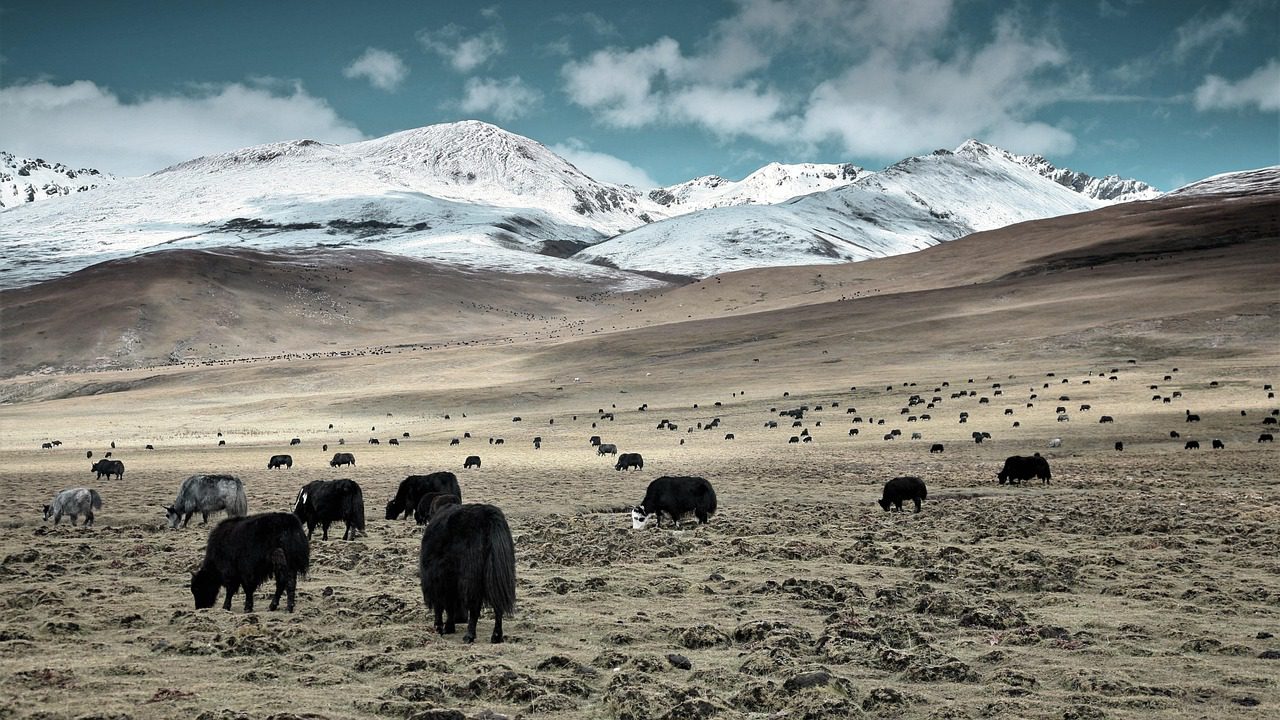
The Code That Forgot the Mountain By Declan P. O’Connor Introduction — Between the Feed and the Field What a Yak-Herder Knows That Our Phones Forget Dawn in Changthang is a lesson in patient arithmetic. A herder checks the wind on his cheek, counts animals by memory, and reads the sky like a ledger older than script. The phone in his pocket, when there is reception, wants to teach a different arithmetic—likes, impressions, graphs that move as briskly as cold air across the plateau. But the yak insists on another cadence: step, chew, breath, step. This is where the phrase “algorithm and the yak Ladakh” acquires a plain, working meaning. The algorithm—ours—makes a map of attention and rewards speed. The yak—his—makes a living of attention and rewards steadiness. Watching the herd cross a patchwork of frost and tussock, one sees a style of thinking that treats slowness as data. Each hoofprint is a stored instruction; each pause is a calculated delay; each return to the same path is version control. Europeans arrive with itineraries stitched by airport lounges and glowing dashboards, but Ladakh answers with a test of patience: can you let the land update you at its own interval? When the mind relaxes, the feed contracts, and the field expands. The yak’s code is not written but grazed; it does not refresh—it repeats. In repetition, there is not boredom but memory; not waste but calibration. On this height, the algorithm must learn to make room for what breath, altitude, and hunger already know. How a Plateau Becomes a Page and a Pilgrim Becomes a Reader To understand Ladakh is to accept that landscape is not a picture but a text—less landscape-as-image than landscape-as-grammar. Rivers do not simply shimmer; they conjugate necessity. Villages do not sit on the margins; they annotate risk. The “algorithm and the yak Ladakh” motif helps us read this grammar because it keeps attention where it belongs: on how life is computed under constraint. Scarcity edits the sentence; weather rewrites the draft. A herder becomes a reader of texture and temperature, a steward of small certainties. The visitor, meanwhile, is tempted to outsource this reading to the device—download weather, cache maps, screenshot monastery hours. Yet the plateau changes the compact between knowledge and time. Here, a morning of waiting is not a glitch in plans; it is the plan. The yak waits because the sun will do what the sun does. The pilgrim waits because meaning matures at the speed of breath. To stand on a ridge above Tangtse and feel silence thicken is to meet a literacy we forgot we possessed: the ability to take instruction from slowness. Not the slowness of deprivation, but of depth. The phone can measure elevation and count steps; it cannot count how a horizon steadies you. To rank well in the search index of your days, you must learn an index older than keywords: footfall, cold, light, gratitude. On this plateau, attention is not captured; it is cultivated. What you reward with patience, you inherit as meaning. The Mountain Does Not Refresh Flickering Signal, Steady Ridge: Rethinking Reliability Somewhere between Leh and Hanle the bars on your screen begin to fall away like the last leaves before winter. What replaces them is not silence but a different form of reliability. The ridge holds. The river keeps its bargain with gravity. A village prayer bell moves air in the same key it did for a century. The algorithm in your pocket defines reliability as always-on availability; Ladakh defines it as always-there continuity. The difference alters how you relate to the day. In the city, the fault line runs through the network; here, it runs through the self. When the feed fails to refresh, we call it downtime; when the mountain “fails” to refresh, we call it morning. The result is a curriculum in which you learn to carry fewer assumptions about control. By the third day at altitude, sleeping and waking become negotiations with oxygen. The body prioritizes; the mind follows. The “algorithm and the yak Ladakh” rhythm suggests that reliability is designed into the ecology by restraint, not abundance. A monastery library preserves texts by asking them to endure cold and care; our servers preserve posts by asking them to endure scale and surveillance. The yak, unmoved by both, keeps teaching an older redundancy: carry what you can, and carry it slowly. Faith Without Notifications: A Chapel of Delays At a small gompa above a lateral moraine, a monk unrolls a thangka whose pigments still outpace the weather. The prayer drum turns once, then again, and you notice the liturgy’s fondness for repetition. Delay becomes devotion. The mountain does not refresh, yet the ritual does; every turn of the drum is a manual reload of attention. To Europeans raised in the continuous scroll, this can feel like an archaism. But Ladakh proposes that meaning keeps itself by rehearsing itself. The algorithm optimizes by predicting your next click; the ritual optimizes by remembering your last vow. In that reversal, the present becomes a conservatory for the past instead of a runway for the next. The “algorithm and the yak Ladakh” insight is that tools are not our enemies; tempos are. We can keep the phone if we keep the pauses that keep us. The monk looks at the same valley your camera frames, yet he sees a ledger of deeds and debts where you see relief and shadow. If faith is a structure of attention, then the chapel of delays is faith’s native architecture. Each pause is a stone; each repetition, mortar. You exit the gompa with nothing “new,” but with something sturdier: time lengthened by care. The Algorithm of Slowness Yak Logic: Iteration as Mercy To walk behind a herd is to study a doctorate in sustainable iteration. The path is worn not because the animals lack imagination, but because the mountain does. Routes repeat to minimize risk. Grazing returns to what regenerates. The algorithm of slowness is not reactionary nostalgia; it is applied mercy. Mercy to the body that must endure thin air; mercy to the grass that must recover between mouths; mercy to the hour that must include both work and warmth. In this frame, “algorithm and the yak Ladakh” becomes a user manual for human limits. We speak of optimization as if the peak existed without the valley. Yet here, the valley teaches the peak how to be habitable. Iteration is not a rut; it is a reservoir. Each return is a vote for survival. Contrast this with the digital compulsion to novelty, where the first derivative of attention—its rate of change—becomes the tyrant. What would it mean to build tools that track recovery as carefully as they track growth? To design an itinerary where what you don’t do is the central feature? In the hush after a long ascent, the answer doesn’t arrive as a slogan but as warmth seeping back into fingers. We iterate to be kind to tomorrow’s self. Endurance Engineering at 4,500 Meters Engineers talk about graceful degradation—the capacity of a system to fail slowly, preserving core function under stress. Ladakh is a masterclass in this idea, an alpine case study in which communities spread risk across seasons, kinship, ritual, and topography. Houses face in ways that court winter sun. Water channels become braided arguments with melt and stone. Kitchens double as archives of calories and affection. Here, endurance is not brute force; it is clever slack. The “algorithm and the yak Ladakh” paradigm encourages us to imagine technology that builds slack as a feature, not a bug—devices that leave room for silence, routes that budget for wonder, schedules that enshrine contingency. The yak’s heart rate is a metronome for this wisdom: fast is sometimes necessary, but steady is almost always kinder. If European travelers come seeking the productivity hacks of altitude, Ladakh instead offers a humane algebra: reduce inputs of noise, increase outputs of presence. The mountain knows your metrics are temporary; its metrics—snowlines, fecundity of fields, the reuse of old paths—are generous because they are slow. At 4,500 meters, engineering grows tender. The test rig is your breath. The pass/fail criteria are warmth, companionship, and a horizon you can trust tomorrow. The Civilization of Fragility Strength That Refuses to Shout The phrase sounds paradoxical until you share butter tea with a family that measures prosperity in the number of winters they can greet without debt. Fragility, here, is not weakness; it is precision. It is knowing which stone in a wall must not be moved, which story in a household must be told again, which field cannot afford a careless boot. Civilizations that mistake scale for strength forget this; they expand until attention collapses. In contrast, Ladakh’s scale is intimate; its strength is calibrated to its margins. The “algorithm and the yak Ladakh” theme reveals fragility as a civic technology. Festivals distribute joy across dark months. Monastic calendars pace communal energy. Even the etiquette of tea is a protocol for warmth. Europe’s cities once possessed similar micro-infrastructures of care; some still do in stubborn neighborhoods that refuse to surrender their baker and bell tower. The point is not to enshrine fragility as a fetish, but to borrow its intelligence. Systems that assume abundance are brittle; systems that rehearse scarcity are supple. Ladakh rehearses scarcity with grace. If you want to teach a machine humility, start by teaching it winter. Ritual as Data Preservation Archives survive when the culture around them understands why a page deserves tomorrow. Ladakh’s rituals perform this function without fuss. A village festival is the backup of a moral code; a harvest dance is an executable file of gratitude. In a world where data is cheap and meaning is expensive, ritual conserves value by making memory physical. The “algorithm and the yak Ladakh” motif suggests that our modern problem is not storing bits but storing atten
source https://lifeontheplanetladakh.com/blog/algorithm-and-the-yak-ladakh/


Comments
Post a Comment