The Altitudes That Teach Us What Endurance Forgets
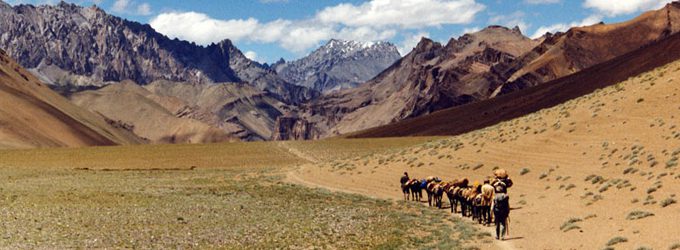
High Places and the Lessons Hidden in Thin Air By Declan P. O’Connor Introduction — The Strange Honesty of High Altitude Why Certain Landscapes Tell the Truth We Avoid There are journeys you take for the photographs, and journeys you take because something in you has quietly run out of excuses. The Rumtse to Tso Moriri trek belongs firmly in the second category. On the map, it is a ten-day high-altitude route across Ladakh’s Changthang plateau, a sequence of passes, valleys, and lakes that could be described in the efficient language of distance and elevation gain. But in the body, and eventually in the conscience, it unfolds as something else: a long, slow negotiation with the stories you tell yourself about what you can endure, and why you think endurance is always a virtue. High altitude has a way of stripping conversation down to essentials. Above four thousand meters, the air becomes impolite. It no longer covers for your bad habits. The Rumtse to Tso Moriri trek does not shout its difficulty the way more famous Himalayan routes do; there are no triumphant queues on a summit and no international headlines. Instead, there is a day after day insistence: breathe, step, listen. The landscape, with its vast mineral colors and unhurried horizons, is not interested in your curriculum vitae, your digital footprint, or how well you have optimized your calendar. It is interested only in whether your lungs and your will can keep pace with the slow arithmetic of altitude. For many European travelers, this part of Ladakh is first encountered on a glowing screen. The images look almost unreal: turquoise lakes, white peaks, ochre valleys, and a scattering of nomad tents that seem arranged by an art director. It is easy to file the Rumtse to Tsomoriri trek under the growing category of “once-in-a-lifetime experiences,” another item on a responsible traveler’s checklist. But the truth is that these high places are not props for self-improvement. They are arenas of honesty where your hidden allegiances—to comfort, to control, to constant stimulation—are quietly exposed. If you let it, this trek becomes less about conquering distance and more about entering a conversation with a landscape that does not flatter you. It asks why you need to be here, so far from sea level and soft beds, and it refuses to accept the first answer you give. How Thin Air Reorders What Modern Life Magnifies Modern life is remarkably efficient at magnifying the wrong things. Your inbox grows, your notifications multiply, your sense of urgency expands to fill every available hour. What shrinks, almost imperceptibly, is your capacity to sit still in your own company. The Rumtse to Tso Moriri trek, with its long approach through Leh and Rumtse, begins by reversing those proportions. Before you even set foot on the trail, you are told to acclimatize: to slow down, to rest, to do nothing very productive. High altitude forces a kind of spiritual jet lag in which your body refuses to travel at the speed of your ambitions. Out on the trail, the air completes the work your to-do list never could. At five thousand meters, you cannot fake presence. Each step between Rumtse and Kyamar, each ascent towards passes like Kyamar La or Mandachalan La, requires attention that might once have been scattered across multiple screens. The mind that once thrived on fragmentation discovers that it has only enough oxygen for one task at a time: lift the foot, place the foot, draw the breath. In this thin air, multitasking dies first. This reordering is not romantic in the way travel brochures suggest. It can be petty, even humiliating. The person who managed a team, juggled projects, and boasted of resilience may find themselves winded by a modest slope on the Rumtse to Tsomoriri trek. Yet within that humiliation lies the quiet opening for a different measure of a life. What if your worth were not calculated by how much you can cram into a day, but by how gracefully you can do one difficult thing slowly and well? Thin air has no patience for the illusions that modern life magnifies. But it does make room, if you stay long enough, for a gentler truth: you are smaller than you thought, and more durable than you feared, and you do not need to shout to find your place in the world. The Geography of Effort — What Trekking Really Measures The Moral Weight of Elevation Gain Elevation profiles are usually printed as lines on a graph: clean, abstract, reassuringly flat on a piece of paper. They show you the climb from Rumtse to Kyamar, the long rise over Kyamar La and Shibuk La, the steady undulations towards Rachungkharu and, eventually, the high crossing of Yarlung Nyau La before Tso Moriri. But those lines conceal as much as they reveal. On the Rumtse to Tso Moriri trek, elevation gain is not just a physical statistic; it is a moral weather report, a record of how you respond when the gradient of your day steepens without asking your permission. In most of our ordinary lives, effort is negotiable. You can reorder priorities, ask for extensions, choose easier paths. On a long Himalayan trail, effort becomes non-negotiable. The pass will not come down to meet you. The only way forward is upward, and the numbers—five thousand meters, six hours, fifteen kilometers—are simply the terms of the conversation. The question is not whether you can manipulate them, but whether you will meet them honestly. When you pause on a climb and watch your breath leave your body in short, visible bursts, you are watching your pretensions evaporate with it. This is where the geography of effort begins to intersect with the interior landscape. Each ascent on the Rumtse to Tsomoriri trek becomes a form of confession: how often have you mistaken busyness for courage, or momentum for meaning? The mountains are indifferent examiners. They mark you not on speed, but on whether you keep moving when no one is watching. In that sense, elevation gain measures not just your fitness but your willingness to stay inside a difficult moment without bargaining for an easier one. To walk these high paths is to accept that some days are simply hard, and that this hardness is not a personal insult but an invitation. Whether you receive it as punishment or as gift may be the most important choice you make above four thousand meters. How Passes Like Kyamar La and Yarlung Nyau La Shape the Mind On the Rumtse to Tso Moriri trek, the passes acquire personalities. Kyamar La is often the first serious test, a reminder that the acclimatization days in Leh and Rumtse were not bureaucratic formalities but acts of respect. Shibuk La introduces the wide, salt-touched presence of Tso Kar below, hinting that water has its own altitude stories to tell. Later, Horlam La feels almost gentle, a reprieve before the more demanding work of Kyamayaru La, Gyamar La, and finally Yarlung Nyau La, the highest threshold between you and the blue mirror of Tso Moriri. These names, unfamiliar to most European travelers, become landmarks in an inner cartography. Each pass forces a reckoning with your assumptions. At the beginning, you may treat them as obstacles to be conquered: ticked off, photographed, celebrated, shared. By the time you approach Yarlung Nyau La, the posture may have shifted. You begin to sense that the passes are less like opponents and more like stern teachers. They compress time and attention into a few crucial hours in which you cannot pretend to be anyone other than who you are. The mind, under this pressure, has choices. It can complain—about the steepness, the cold, the thin air, the betrayal of muscles that once seemed reliable. Or it can grow quiet enough to notice what the landscape is actually offering: the way the light changes on distant ridges, the sound of wind combing through dry grass, the small acts of mutual care within a trekking group. The passes shape you by forcing this choice again and again. Will you narrate the experience as an injustice, or as a demanding form of grace? In a world that trains us to seek the shortest, smoothest route to every objective, there is something subversive about a journey that insists on length and difficulty. The Rumtse to Tsomoriri trek suggests that some truths can only be learned on the long, steep way round. Nomadic Wisdom — The Changpa and the Unhurried World Endurance as a Cultural Value, Not a Sport For many visitors, endurance is a weekend hobby. It is measured in race medals, fitness apps, or the proud soreness after a successful challenge. For the Changpa nomads you encounter near Rachungkharu or along the marshlands beyond Tso Kar, endurance is not an event but a way of being. Their lives are arranged around the slow, demanding requirements of yak and pashmina goats, the movements of weather, and the fragile logic of high-altitude grass. On the Rumtse to Tso Moriri trek, you cross their world as a temporary guest; they inhabit it as a long argument with the elements that began generations before you arrived. The difference becomes clear in the small things. A European trekker, wrapped in the latest technical fabrics, may view a sudden snow squall as an emergency. A Changpa herder treats it as a data point in a lifetime of reading the sky. Where the visitor sees hardship, the nomad sees work; where the visitor feels heroic for reaching a campsite at 4,800 meters, the Changpa child treats that altitude as the backdrop of childhood. To walk through this landscape is to realize that what you call “extreme” is simply “home” for someone else. This realization is quietly destabilizing. It invites you to question the story in which your trek is the central drama and everyone else is a supporting character. On the Rumtse to Tsomoriri route, the Changpa are not extras; they are the primary witnesses to what endurance means when there is no finish line and no applause, only another winter to survive. Their unhurried world reveals endurance as a cultur
source https://lifeontheplanetladakh.com/blog/altitudes-endurance-ladakh/


Comments
Post a Comment