Upper Sham A Quiet Geography of Villages and the People Who Hold Its Light
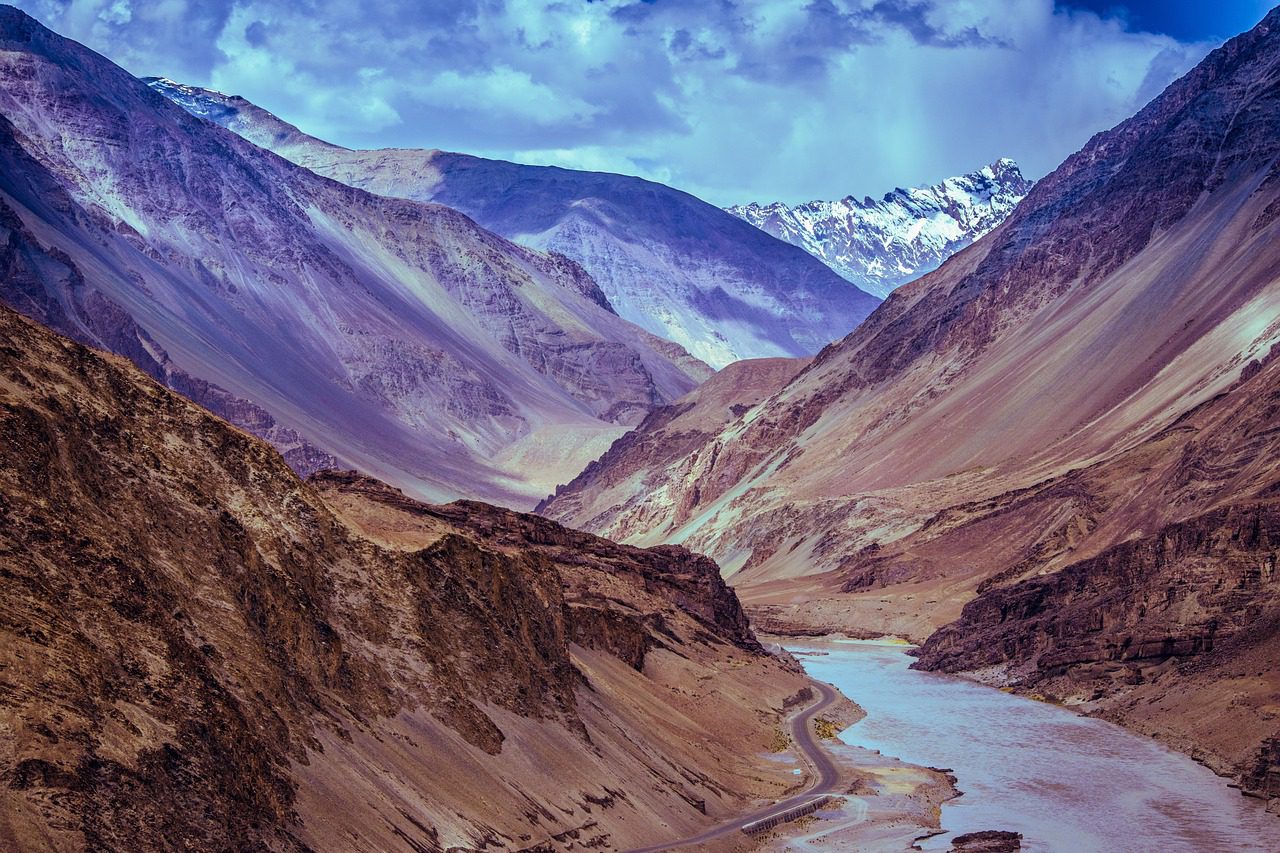
The Slow Villages of Upper Sham and the Lessons They Pass Down to Travelers By Declan P. O’Connor Opening Reflection: A Valley Where Stillness Outlives the Road For most visitors, Ladakh is first a map and only later a memory. They sketch routes on a screen, trace the Indus with a fingertip, drop pins on monasteries whose names still feel abstract and distant. Yet the first time you drive west from Leh and the road begins to follow the river into Upper Sham, something quieter than the map begins to take over. The landscape does not rise to impress you all at once. It simply broadens and settles, as if the mountains have decided that their work is not to perform, but to endure. Upper Sham is not a region of famous summits or dramatic passes. It is a chain of villages held together by fields, water channels, and the long patience of people who have learned how to live with thin air and long winters. For travelers used to hurried itineraries, the surprise is not that these villages are beautiful, but that they seem largely uninterested in our arrival. Life goes on at its own tempo, and the traveler can either slow down to meet it or watch it recede in the rear-view mirror. In Upper Sham, it is the villages that set the pace of the journey, and the road merely negotiates the terms. This is a quiet geography, mapped less by altitude and distance than by habits of attention. To understand Upper Sham, it is not enough to glance through the car window. You have to sit in the kitchen of a homestay, listen to the sound of tea boiling, notice how the afternoon light falls on the courtyard wall, and realize that the real journey is occurring somewhere inside your sense of time. The Geography of Upper Sham: Light, Fields, and the Curve of the Indus Upper Sham runs roughly along the Indus River as it bends westward from Leh, climbing gently through a landscape that looks, from a distance, almost monochrome. The mountains are dry and folded, painted in shades of beige, ash, and soft rust. Only when the road drops toward a village do the colors change. Suddenly there are green fields, whitewashed houses, apricot trees, and the deep, narrow line of an irrigation channel cutting across the slope like a deliberate signature. Unlike the harsher high plateaus farther east, the villages of Upper Sham sit at altitudes that are serious but not punishing. The air is thin enough to slow a brisk European walker, yet kind enough to let most bodies adapt with a bit of care and patience. This combination makes Upper Sham one of the most forgiving gateways into rural Ladakh, a place where travelers can learn the rhythms of the high desert without being overwhelmed by it. The villages themselves are arranged not according to the logic of tourism, but according to older needs: water, arable land, defensible positions, proximity to monasteries. The result is a chain of settlements that feel related yet distinct, like verses in a single long poem written along the river. As you move from one to the next, you begin to understand that this geography is not just physical. It is a web of paths, stories, and seasonal routines that has been quietly holding people here for centuries. Village Profiles: The Places Where Light Stays Longer Likir: Monastery Bells, Apricot Trees, and the First Lesson in Slowing Down For many travelers, Likir is the first real pause after leaving Leh, a place where the journey shifts from transit to encounter. The village sits on a rise above the valley, its fields laid out like a careful offering below the walls of Likir Monastery. From a distance, the gompa dominates the view, its white and ochre buildings clinging to the hillside, the golden statue of the Buddha watching over the fields. Yet once you step out of the car and onto the footpaths between the houses, the monastery bells become only one voice among many. Likir’s fields are a classroom in mountain agriculture. Barley, peas, and potatoes grow in narrow terraces cut into the slope, fed by small channels of meltwater guided by hand and by habit. In late summer, the apricot trees are heavy with fruit, and the courtyards are bright with orange slices laid out to dry. It is here that many European travelers first notice how differently time flows in a Ladakhi village. Tasks are not rushed, but they are rarely postponed. Work is done in a steady, communal rhythm, with a sense that the weather and the water, not the clock, are the final authorities. Spend a night in Likir and you begin to feel your own speed recalibrate. The homestays are simple but generous, their kitchens warm with the smell of butter tea and fresh bread. Conversation moves gently between Ladakhi and broken English, punctuated by long, comfortable silences. Outside, the wind moves through the fields, and the monastery bells mark the hours with a kind of patient certainty. Likir does not ask you to stay. It simply demonstrates what staying looks like and leaves the decision to you. Yangthang: Barley Fields, Whitewashed Rooms, and the Art of Being Hosted If Likir is a first invitation to slow down, Yangthang is where that invitation becomes a lived experience. Reached by an undramatic but quietly beautiful walk over low ridges, the village sits in a basin of fields and orchards, its houses gathered like a small, bright constellation at the center. From the surrounding slopes, Yangthang appears almost self-contained, a compact world organized around water, soil, and the daily choreography of people and animals. Yangthang is perhaps best known among trekkers for its homestays. To arrive here on foot, dusty from the trail and slightly breathless from the altitude, is to step directly into the heart of Ladakhi hospitality. Guests are ushered into whitewashed rooms lined with carpets and cushions, offered tea before questions, and given the sense that their presence is an addition to the household, not an interruption. There is a difference between service and hosting, and Yangthang quietly insists on the latter. The barley fields around the village tell their own story. In early summer they are a soft, improbable green against the bare hills. By late season they have turned gold, their harvest a communal effort that draws in neighbors and relatives. For the traveler who lingers, these cycles become visible, and with them a deeper understanding of how a village holds itself together across generations. Yangthang does not rush to explain any of this. It assumes that if you are here, you have already chosen to walk at a pace that allows such details to register. Hemis Shukpachan: Juniper Forests, Sacred Paths, and the Spiritual Heart of Upper Sham Further along the trail, Hemis Shukpachan feels like a village that has grown around a series of quiet devotions. Its name comes from the abundance of juniper trees—shukpa—which are sacred in local tradition and used in rituals, offerings, and daily acts of purification. Walking into the village, you notice the shift almost at once. There is more shade, more fragrance, and a subtle sense that the landscape itself has been invited into the sphere of worship. Prayer flags move in the breeze along ridgelines and footpaths, and small stupas stand where paths meet or where the view opens over the valley. Villagers pass them with a brief pause or a turn of the prayer wheel, gestures that take only a moment but carry centuries of habit and meaning. For the traveler, these small rituals can be disorienting at first. They do not demand participation, yet they quietly suggest that the space you are moving through is not purely secular. Hemis Shukpachan is often remembered by visitors as the most beautiful village of the trek, though this says as much about the inner state of the traveler as it does about the place. By the time most people reach it, they have spent days walking, sleeping in homestays, and adjusting to a slower rhythm of life. The village’s juniper groves and stone houses, its fields and shrines, are received by senses that have already been softened and opened by the journey. In that sense, Hemis Shukpachan is less a destination than a revelation: a moment when the quiet geography of Upper Sham finally comes into clear focus. Uleytokpo: Indus River Light and the Night Sky as a Second Roof Leaving the tight folds of the trekking routes, Uleytokpo brings you back down toward the river without quite returning you to the noise of the highway. The settlement stretches along the slope above the Indus, its camps and guesthouses arranged to catch both the afternoon sun and the open sky at night. For many travelers, Uleytokpo functions as a soft landing—an intermediate space between remote villages and the more familiar routines of road travel. Here, the soundscape changes. The muffled quiet of high side valleys is replaced by the distant rush of the river and, occasionally, the low hum of a vehicle passing on the main road below. Yet Uleytokpo retains a gentleness that surprises first-time visitors. The accommodations are often simple eco-camps or small lodges, their gardens edged with poplars, their dining rooms filled with a mix of local families and foreign trekkers comparing notes on routes and passes. At night, when the generator noise fades and the conversations thin out, the sky takes over. In a region with little light pollution, Uleytokpo offers an unobstructed view of stars that seem close enough to touch. For European travelers used to city skies, this alone can feel like a reason to stay an extra night. In the morning, as the sun climbs over the ridge and the river brightens into motion, Uleytokpo reveals itself as what it has quietly been all along: a resting place that allows the body to recover and the mind to catch up with the journey. Tar: A Hidden Hamlet at the End of a Narrow Gorge Not all villages in Upper Sham announce themselves from the road. Tar must be earned. Reached by following a narrow gorge away from the m
source https://lifeontheplanetladakh.com/blog/upper-sham/


Comments
Post a Comment