Where the Water Learns to Wait
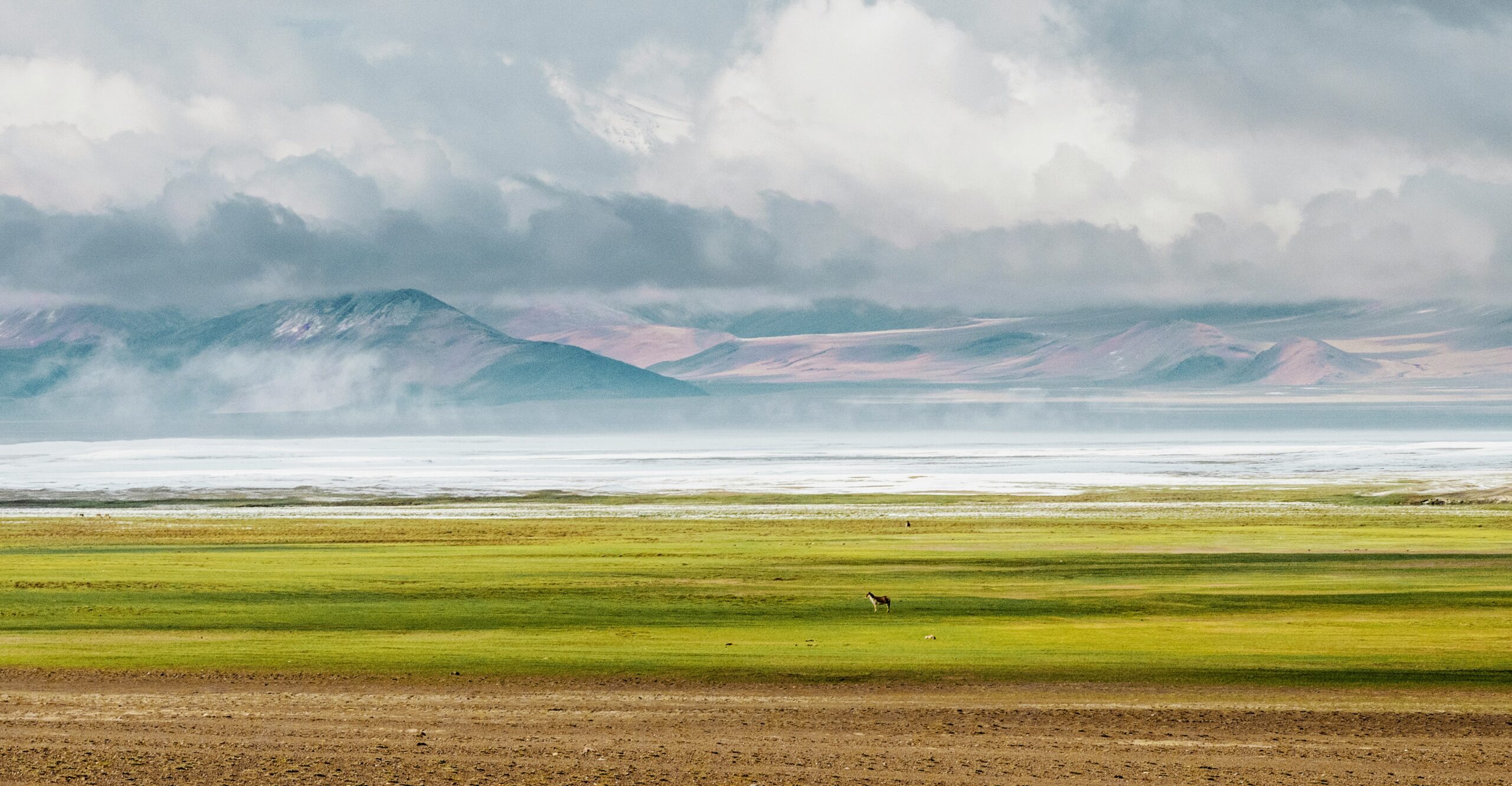
How Stillness Shapes the Traveler in Ladakh’s High Lakes By Declan P. O’Connor Opening Reflection: When Altitude Changes the Sound of Water Listening to water in air that has forgotten how to carry noise On most of the maps spread out on a kitchen table in Europe, the lakes of Ladakh are drawn as small, pale smudges of blue on a beige and white plateau. They look insignificant at first glance, the kind of cartographic symbolism you might skip over as your eyes go hunting for famous passes or border lines. Yet anyone who has stood on the shore of a high-altitude lake in Ladakh knows that the map is lying by omission. The first thing you notice is not the color of the water or the shape of the shoreline, but the way sound behaves differently here. In this thin air, the world seems to forget how to echo. The wind drags itself across the surface of the lake and then disappears, as if embarrassed by its own noise. You come from cities where water is loud: fountains, traffic spraying over asphalt in the rain, waves crashing in crowded coastal resorts. By contrast, the lakes of Ladakh are quiet not because nothing is happening, but because everything is happening slowly. The ripples spread with a kind of reluctance, the distant call of a bird arrives a second later than you expect, and your own footsteps on the gravel shore feel oddly muted. The high-altitude desert does something to sound; it strips it down to a bare minimum, leaving you alone with the faint lap of water on stone and your own breathing. It is in this strange acoustic that the journey really begins, not when the plane lands in Leh, but when you recognize that you have entered a geography where stillness has more authority than movement. That realization is unsettling at first. Modern travel, particularly the kind marketed to people who live their lives online, celebrates momentum: the number of sights, the number of photos, the list of destinations crossed off in a short span of time. The lakes of Ladakh refuse this logic. They do not shout their presence like famous beaches or crowded viewpoints. Shashi Lake, Mirpal Tso, Yarab Tso, the twin surfaces of Stat Tso and Lang Tso, the broader basins of Tso Moriri and Tso Kar, even the more visited Pangong Tso: each one seems to lean away from the traveler until the traveler slows down enough to meet them halfway. The soundscape is your first lesson. You have to quiet yourself before the place is willing to speak at all. Arriving not just in place, but in a different tempo of attention Most visitors think of arrival as a single event: the moment the plane touches down, or the instant the car door opens beside a viewpoint where everyone reaches for their phones at once. In the high lakes of Ladakh, arrival is gradual. Your body takes days to catch up with the altitude, your breathing learns to move in smaller increments, and your thoughts, if you let them, begin to stretch out over longer distances. It is entirely possible to stand on the shore of a lake like Kiagar Tso, or beside the quiet surface of Chagar Tso, and not really be there yet. Your eyes may be on the turquoise water and the snow behind it, but your mind might still be scrolling through obligations and leftover anxieties from home. This is why the first days around the lakes of Ladakh can feel strangely disorienting. You expect an instant revelation, a postcard epiphany delivered right on schedule. Instead, you are given a slowness that feels, at the beginning, like a failure. The road has been long, the air is thin, and yet the lake mostly just sits there, bright but distant, as if it belongs to a different calendar than yours. Only later do you realize that this is precisely the point. The landscape refuses to match your urgency. It makes you live with a kind of temporal friction, where the speed at which you are used to consuming experiences collides with the much older and slower rhythms of glacial meltwater and stone. In this way, the lakes of Ladakh function as a quiet critique of how many of us have learned to travel. They do not reward those who arrive ready to extract value quickly; instead, they favor those who are ready to be slightly bored, a little uncomfortable, willing to sit in the uneventful middle of the day while the light changes almost imperceptibly on distant peaks. To arrive here fully is to accept that nothing much will “happen” in the conventional sense. The drama is internal: the gradual surrender of your schedule to the patient grammar of the mountains and water. You came to see a place, but you end up confronting a different question: how willing are you to let the place see you, not as a consumer of views, but as a student of its pacing? The Desert That Remembers Water Lakes as survivors in a land without excess The plateau around the lakes of Ladakh looks, from a distance, like a landscape that has forgotten water. The hills are the color of old parchment, the valleys carry the memory of rivers that now only appear during brief melt seasons, and the wind is full of dust that has been traveling for years. To find lakes here feels, at first, like a category error. What is water doing in a place that seems designed for scarcity? The answer, if you stay long enough to pay attention, is that these lakes are not accidents. They are survivors, the last repositories of a long conversation between snow, glacier, rock, and evaporation. They exist precisely because nothing is wasted. When you look at Tso Kar, with its shifting white crusts and migratory birds, or at the longer, calmer lines of Tso Moriri, you are not just looking at scenic “spots.” You are witnessing a balance that is far more precise than it appears. Glacial meltwater arrives in unpredictable bursts, carrying with it minerals and silt. The sun takes its tax in evaporation. The wind moves the surface one way in the morning and another way in the evening. What remains is the lake, an accumulated compromise between forces that do not particularly care whether a traveler is there to photograph them. The lakes of Ladakh remind you that water here is never casual. Every shoreline is an argument that water has won, at least for now, against sun, wind, and altitude. This sense of survival changes how you read the rest of the landscape. The dry plains around Mirpal Tso or Ryul Tso suddenly look less like empty spaces and more like the pages on which the story of water is written in invisible ink. You begin to understand that the lakes persist because the rest of the land has agreed to be austere. There are no lush forests to drink the meltwater, no dense settlements to divert it into pipes and tanks. The lakes endure partly because the surrounding terrain has accepted a kind of discipline. In return, the lakes offer a version of beauty that is stripped of luxury and yet intensely generous in its own way: reflections, quiet, and the grace of endurance in a place that could easily have let go of water altogether. Why patience, not conquest, is the right posture In many parts of the world, outdoor culture is built around the language of conquest. You “tackle” a trail, “conquer” a summit, “do” a region in a set number of days. The lakes of Ladakh expose the shallowness of that vocabulary. You do not conquer a place like Shashi Lake, hidden in its own basin, or the subtle pair of Red and Blue Lakes, whose colors shift with the angle of light and cloud. You barely even arrive. At best, you are granted temporary proximity. The water does not need you; the birds, the wind, and the sky would get along fine without your presence. Recognizing this is the first step toward the posture that actually makes sense here: patience. Patience in the lakes of Ladakh is not passive. It is an active decision to stop imposing your tempo on the place. It means accepting that the shore might be windy and cold when you first arrive, that the light might be flat, that the color of the water might seem disappointingly ordinary. Instead of demanding an instant reward, you stay. You walk a little, then you sit. You watch how the light changes over an hour, or how a group of nomads move their herd along the distant shore of Kiagar Tso. You start noticing tiny shifts in color and texture that would never appear in the hurried itinerary of a checklist traveler. Patience is not a virtue in the abstract here; it is the only method by which the landscape reveals itself. And as you learn this, another realization follows quietly. The lakes have been patient with you long before you became patient with them. They waited through winters before you were born, through storms and border tensions and the slow expansion of tourism. They have seen travelers come and go in patterns that barely register on their own timescale. When you begin to adjust your posture from conquest to attentiveness, you are not doing the lakes a favor; you are finally aligning yourself with the way they already exist. You become, briefly, a student of water that has learned to wait in a desert that remembers every drop. Altitude as a Mirror: What the Traveler Notices Only When the World Slows Down The way high lakes teach humility Humility at sea level is usually a social virtue: a way of not taking up too much space in conversation or refusing to brag about achievements. At three or four thousand meters, humility becomes physiological. The lakes of Ladakh are ringed by hills that do not look particularly intimidating on a map, yet your lungs quickly inform you that altitude does not negotiate. A short climb above Pangong Tso or a gentle walk along the edge of Tso Moriri can leave you breathless in a way that surprises those used to gyms and running tracks at home. The body learns, quite literally, to slow down. Pride has less oxygen up here; it does not thrive. This is part of why the lakes of Ladakh are such powerful mirrors. They reveal very quickly what you can and cannot control. You cannot command you
source https://lifeontheplanetladakh.com/blog/water-learns-to-wait/


Comments
Post a Comment