10 Remote Changthang Plateau Villages That Reveal the Soul of Ladakh
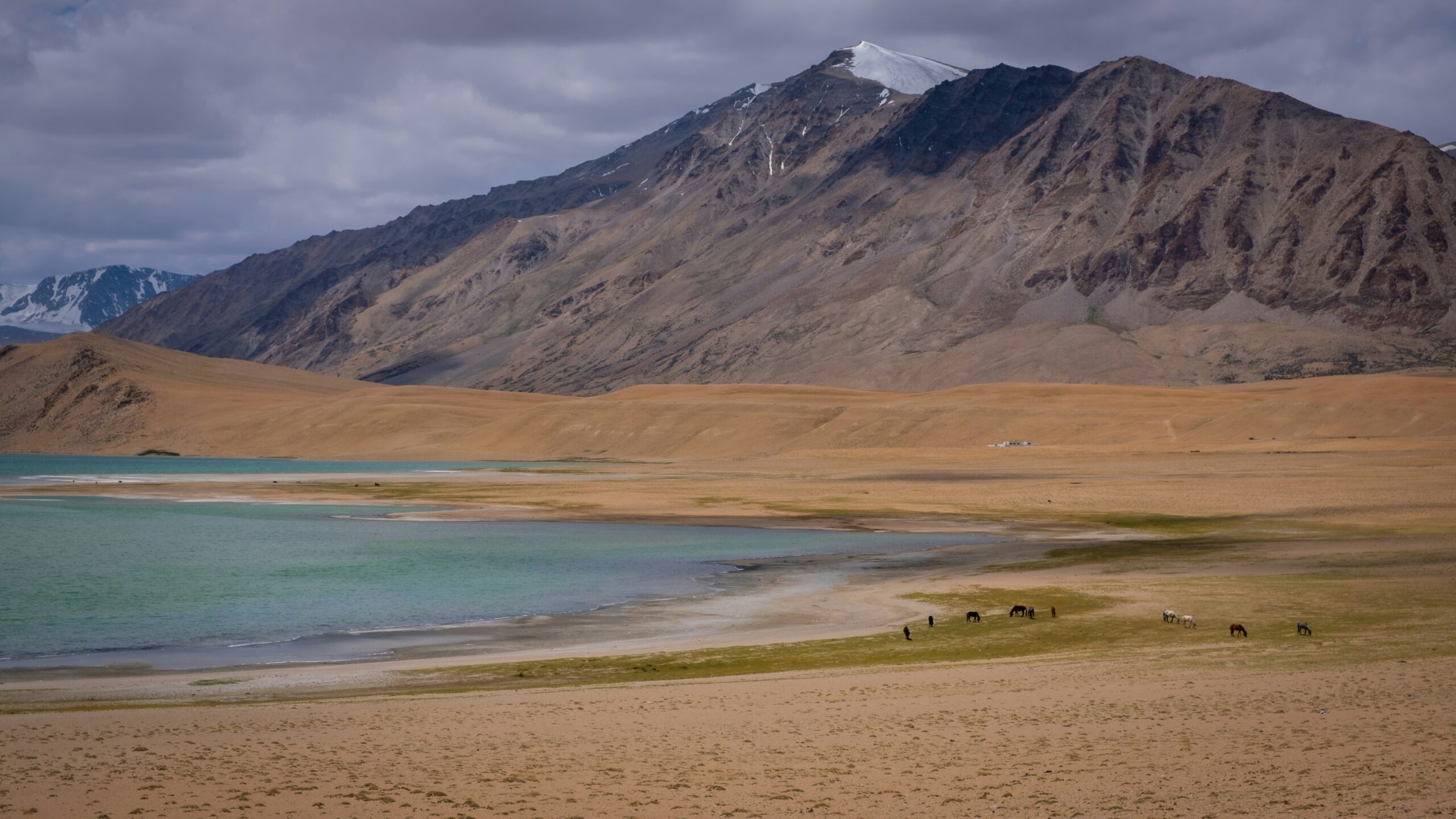
Where the High Plateau Teaches Us How to See Again By Declan P. O’Connor 1. Prologue: Learning to Listen in Thin Air Why the Changthang Plateau Resists Simple Narratives The map calls it a plateau, as if it were a tidy tabletop laid down between Ladakh and Tibet. On the ground, though, the Changthang Plateau feels less like a place and more like a long, slow question. The road climbs and the oxygen thins, and your first instinct is to summarize what you see: high-altitude desert, wide valleys, distant ridgelines, a scattering of villages that appear like afterthoughts against a vast sky. Yet the longer you stay, the more those easy labels begin to fall apart. The Changthang Plateau refuses to be compressed into a slogan or reduced to a convenient travel category. It demands a slower kind of attention, the kind that makes you admit how quickly you usually pass through the world. For the casual visitor, these remote Changthang Plateau villages might seem interchangeable. A cluster of whitewashed houses, a few animals, a small monastery hovering on a ridge — then the road bends and you are already elsewhere. But for those who linger, the differences between these communities become unmistakable. Each village carries its own microclimate, its own rhythm of work and prayer, its own history of hardship negotiated with the state, the army, and the weather. To understand why these places matter, you cannot simply check them off on an itinerary. You have to listen: to the way the wind changes direction in the afternoon, to the way elders switch between languages mid-sentence, to the way the Changpa nomads talk about pasture as if it were a member of the family. If Ladakh’s valleys teach you how to walk slowly, the Changthang Plateau teaches you how to see again. The light is unforgiving, so every line in the landscape is etched sharply, every mistake in your own assumptions equally visible. Travelers come for the idea of remoteness, but what they find is something more unsettling: a mirror. The plateau’s empty distances return your own restlessness to you and ask whether constant motion has really made you free. That is why these villages resist simple narratives — they reveal how much of our travel story is about us, and how much remains unspoken about the people who stay. The Cultural and Ecological Threshold Between Ladakh and Tibet The Changthang Plateau stretches across borders drawn on maps in distant capitals, but its culture predates those lines. To the west lies the more familiar Leh–Indus corridor; to the east, the broader Tibetan world. The Changthang Plateau villages inhabit a threshold between the two, a liminal space where state boundaries are recent, but pastoral memory is ancient. Here, stone houses coexist with yak-hair tents, monastic chants with military radio, satellite dishes with stories of winter journeys made on foot when the roads did not yet exist. The villages are Indian by passport, Tibetan by language and ritual, and unmistakably Changthang in their sense of scale and time. Ecologically, this high-altitude world is equally hybrid. Wetlands emerge unexpectedly in the middle of apparent desert, attracting migratory birds that make the Changthang Plateau their brief seasonal home. Salt lakes flash silver and white between brown hills, and geothermal springs hiss quietly in the middle of barren valleys. The pastoral economy is tuned to a fragile balance: too little snow and the grass does not grow; too much and the passes close earlier than planned. Climate change is not a distant abstraction here but a yearly recalculation of survival. The villagers and nomads of Changthang navigate this uncertainty with a mixture of improvisation and inherited knowledge — shifting camps, altering routes, adjusting flock sizes — in ways that rarely appear in glossy brochures. To stand in one of these borderland settlements is to feel both proximity and distance at once. Lhasa is closer in culture than New Delhi, yet the decisions made in Delhi shape road construction, telecom towers, and school curricula. The Changthang Plateau villages sit at the hinge between geopolitical anxiety and local continuity. Soldiers patrol the ridges; children walk to school past prayer flags; elders take comfort in rituals that have outlived many changing regimes. For the traveler from Europe, this threshold is humbling: it challenges the idea that modernity moves in a straight line from “traditional” to “developed.” On the Changthang Plateau, the line bends, loops, and occasionally disappears into the snow. 2. Why These Villages Matter More Than a Map Suggests The Philosophy of Distance: Why Remoteness Shapes Human Character Distance, in much of modern Europe, is a problem to be solved. High-speed trains, budget airlines, motorways — all exist to shrink the time between here and there. On the Changthang Plateau, distance is not an inconvenience; it is the basic material from which character is formed. When the nearest hospital is hours away and the winter road can close without warning, people learn to plan for what cannot be predicted. The remote Changthang Plateau villages have cultivated a philosophy of distance that shows up in the smallest details of daily life: the way supplies are rationed, the way repairs are improvised, the way neighbours become an informal insurance system against failure. For the visitor, this remoteness can feel romantic for about twenty minutes and then quietly unsettling. You realize how much of your confidence rests on the assumption that help is always a phone call away. Here, phone signals fade in and out, fuel deliveries are uncertain, and winter storms do not check the forecast before arriving. Yet the people of these villages carry no melodrama about their circumstances. Distance is simply the given condition, not a heroic obstacle. Children walk long routes to school without complaint. Families accept that a journey to the district headquarters may require an overnight stay, or two, or three. Far from making life small, distance stretches it — days are measured not in appointments but in the time it takes to move sheep, fetch water, or visit a relative in a neighbouring valley. For a European reader, there is a quiet lesson here. The Changthang Plateau villages remind us that remoteness can be an ethic as well as a geography. When you cannot outsource resilience to a supply chain or a delivery service, you build it into your relationships instead. You depend on others not in abstract solidarity, but in very concrete ways: borrowing a tool, sharing fodder, taking in animals when a neighbour falls sick. Distance forces a certain seriousness about commitment, because flaking on a promise can have consequences far beyond inconvenience. Remoteness, in other words, trains people in a kind of moral stamina that our hyper-connected world often erodes. Nomadic Memory, High-Altitude Adaptation, and the Ethics of Presence Even in villages that now appear settled, the memory of movement remains strong. Many families in the Changthang Plateau villages trace their roots to pastoral camps that shifted seasonally, guided by grass and snow rather than by property lines. This nomadic memory shapes how people occupy space. A house is important, but so is the route between the winter and summer pastures. A village boundary matters, but so does the knowledge of where to find shelter when a storm arrives unexpectedly. To live here is to accept that human plans must be negotiable when the weather, the animals, or the land say otherwise. High-altitude adaptation is visible in the body — in the sure footing on loose gravel, the steady breath at 4,500 metres, the relaxed way children run in air that leaves visitors gasping. But it is also visible in a certain ethic of presence. In the Changthang Plateau villages, people rarely pretend they can be in two places at once. The distances are too real, the work too physical. When someone comes to visit, they commit several hours to the encounter. When a guest arrives, the host accepts that the day’s tasks will have to be reordered. There is no illusion of omnipresence or multitasking; one is simply here, or somewhere else, and each choice has weight. For travelers used to living online as much as in place, this ethic of presence can be disorienting, even liberating. Your phone battery dies quickly in the cold; the signal disappears around the next bend; the screen becomes little more than a camera. What remains is the immediate company of people and land. To walk with a Changpa herder as he checks on his flock is to witness an intimacy with terrain that cannot be downloaded. He reads the slope, the clouds, the behaviour of the animals, and decides whether to linger or move on. Presence here is not a mindfulness slogan; it is a daily, practical discipline without which survival would be impossible. How the Plateau Reframes the Traveler’s Expectations of “Adventure” Adventure, in many travel brochures, is a packaged experience: a manageable amount of risk, framed by assurances of safety and comfort. On the Changthang Plateau, adventure is less photogenic and more honest. Roads may close, homestays may be full, the only available meal might be simple tsampa and butter tea. The remote Changthang Plateau villages do not exist to fulfil a visitor’s fantasy of ruggedness; they function on their own terms, and sometimes those terms are inconvenient. Yet precisely because of this, the encounters that happen here can feel more genuine than any planned “off-the-beaten-path” excursion. The plateau asks awkward questions of our expectations. Do we want authentic encounters, or curated ones that feel authentic but operate on our schedule? Are we willing to accept that a village celebration, a livestock emergency, or a sudden storm may rearrange our perfect itinerary? In Korzok or Hanle, the arrival of an outsider is rarely a major event. People are polite but b
source https://lifeontheplanetladakh.com/blog/changthang-plateau-villages-ladakh/


Comments
Post a Comment