A Quiet Corridor of Villages: From Leh to the Threshold of Changthang
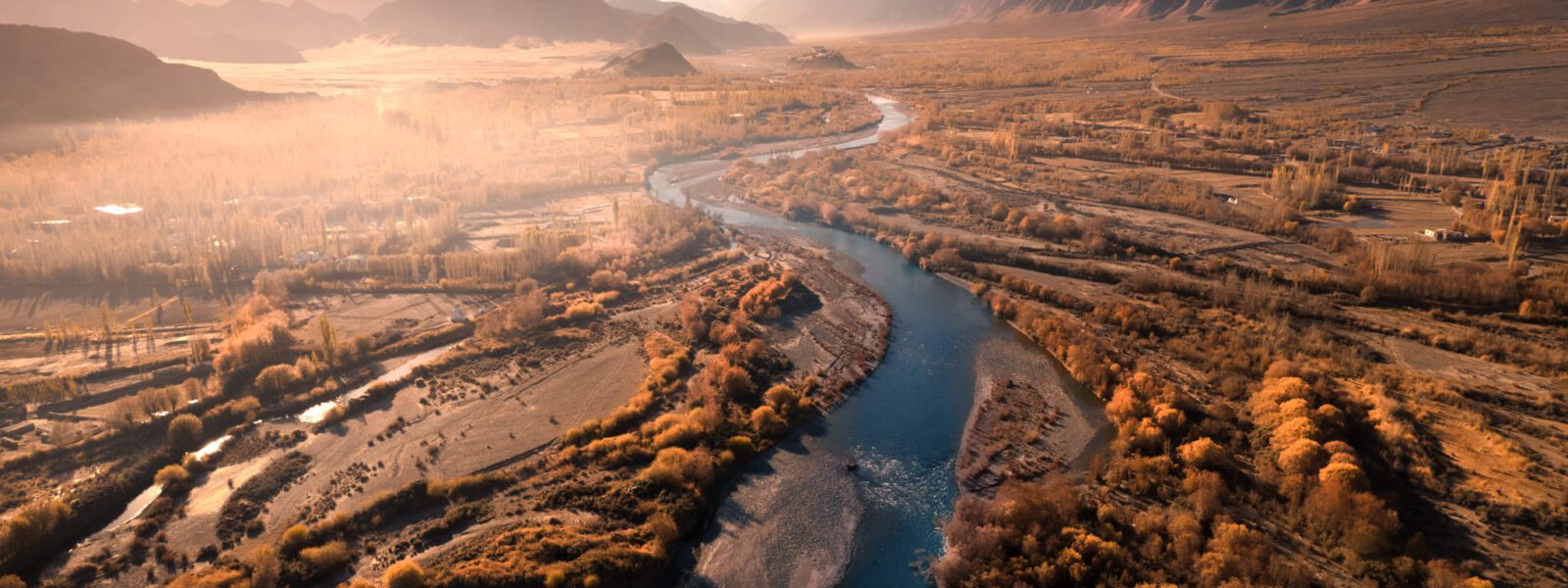
Where the Road Softens Into Villages and Memory By Declan P. O’Connor 1. Opening Reflection: The Corridor Before the High Plateau Why this quiet stretch between Leh and the unseen Changthang matters If you follow the road east from Leh, you do not arrive immediately at the wild emptiness of the high plateau. Instead, you move through a quieter corridor of villages, fields, monasteries, and river bends that feel less like a transit zone and more like a long threshold. This stretch from Leh to the first hints of the Changthang is not yet the famed high-altitude desert, nor is it the dense, touristed town center. It is something else: a lived-in landscape where the ordinary days of Ladakhi life still hold their ground against the pressure of speed, itineraries, and bucket lists. The Leh–Changthang corridor matters because it is where most travelers reveal their habits. Some treat it as dead space, a blur outside the car window between more photogenic destinations. Others allow the road to slow their assumptions down. Here, near the Indus, the villages that line the river – Choglamsar, Shey, Thiksey, and Matho – offer a first education in what it means to inhabit altitude not as spectacle but as home. Further along, as the road climbs past Stakna, Stok, Hemis, Karu, Sakti, and Takthok, the mountains draw closer, the air dries, and the conversation changes from “What can we see?” to “How do people live here, day after day?” In this corridor, the map is less important than the pace at which your attention learns to walk. To travel from Leh to the threshold of Changthang is to move through a chain of places that quietly insist on their own dignity. It is here, before the road tips over the high pass, that you begin to understand Ladakh not as a backdrop for adventure, but as a web of villages where light, work, and memory are still braided tightly into each day. 2. The Indus-Side Settlements: Fields, Monasteries, and Old Kingdom Echoes Choglamsar: a village of crossroads, classrooms, and quiet resilience For many visitors, Choglamsar appears first as a cluster of buildings on the way out of Leh, a semi-urban sprawl that seems neither fully village nor fully town. But if you pause long enough, the place rearranges itself. Beyond the main road, lanes drift towards the Indus where fields still stretch in wavering green patches, irrigated by channels that have little patience for the categories of urban and rural. Here, families who arrived as refugees, traders, or workers share space with older Ladakhi households whose grandparents remember when Leh felt like a distant outpost rather than a busy hub. Choglamsar is a village of crossings. It hosts schools, small monasteries, community centers, and homes where several languages are spoken in the same courtyard. The Leh–Changthang corridor feels particularly human here: young people commute to Leh for work or study, then return in the evening to the sound of dogs, prayer flags, and the low thrum of generators. Travelers who stay a night or even a long afternoon often say that this is where the story of their journey subtly changes. Instead of asking only about monasteries and passes, they start asking about wages, winter heating, exam results, and what it means to raise children on the edge of a transforming town. The Indus river runs nearby, a constant reminder that Choglamsar is inseparable from the broader valley. In this portion of the Leh–Changthang corridor, the village teaches you that before there are spectacular landscapes, there are people who must simply get through the week. To notice that is to begin traveling differently. Shey: palaces, water channels, and a soft light on stone Further along the Indus, Shey sits with a kind of understated confidence. The ruined palace and large seated Buddha that watch over the village tend to dominate photographs, but in daily life it is the water that matters most. Channels split off from the river and run through the fields with a quiet determination, threading between poplar and willow, feeding barley and vegetables. When the afternoon light drops, it lands on stone, water, and leaf with a softness that is hard to forget. Shey carries the echo of Ladakh’s old kingdom days. Walking between the palace hill and the fields below, you feel the layers of history stacking up: kings who once chose this as a seat of power, monks who turned slopes into stairways of prayer, farmers who still count on the same soils. In the Leh–Changthang corridor, Shey serves as an early reminder that the region is not just high desert but also a long experiment in governance, irrigation, and belief. The faded murals and the glint of the Buddha’s face above the village seem less like relics and more like quiet shareholders in the present. Stay a little longer and you see how Shey lives now. Children walk home from school along the irrigation channels; elders sit in sunlit corners, spinning wool or prayer wheels; small homestays have grown up alongside traditional houses, careful not to overshadow them. You begin to sense that this is not a postcard of old Ladakh but a living compromise between continuity and change, still anchored by the palace rock that holds the horizon in place. Thiksey: where the monastery watches the valley like a long memory Thiksey rises in tiers from the valley floor, its monastery stacked along the ridge like a series of white stones carefully placed by a meticulous hand. Most travelers know the monastery through a handful of images: the great Maitreya statue, the breakfast chants, the view of the Indus valley unfurling below. But Thiksey as a village is larger, slower, and more ordinary in the best possible sense. Behind the monasteries and guesthouses, paths run between houses, fields, and stables where daily routines unfold with little interest in visitor timetables. In the Leh–Changthang corridor, Thiksey is a kind of balcony. From here you look out toward both Leh and the direction of the unseen plateau, sensing how the valley stitches them together. The monastery bells measure the day, but so do school bells and the clank of milk cans being carried from cowsheds to kitchens. In the early morning, as the first sunlight strikes the monastery walls, there is a sense that the village is being gently woken by something older than the road traffic below. Walk down from the monastery and you find small shops selling everyday goods, dusty lanes where children kick a ball, and fields of barley that shimmer when the wind climbs the valley. Thiksey’s power lies not only in its religious architecture but in the way the village frames it: a community that has learned how to live in the monastery’s shadow without being swallowed by it. This balance between sacred and ordinary is part of what makes the corridor from Leh to the Changthang threshold feel so humanly scaled. Matho: a side valley where silence has its own altitude Turn away from the main road toward Matho and you feel the temperature of the journey shift. The valley narrows, the traffic thins, and the soundscape changes from horns and engines to wind and the occasional bark of a dog. Matho sits cradled in this side valley, its monastery perched with a slightly watchful air and its houses clustered around fields that have been coaxed from thin soil with centuries of patience. Matho is known among Ladakhis for its oracles and monastic rituals, but for many visitors its greatest gift is the quality of its silence. It is not the emptiness of a remote pass but a woven silence layered with village life: the scrape of a shovel in a field, the murmur of conversation on a rooftop, the low chant of evening prayers drifting along the slope. Standing here, on the Leh–Changthang corridor yet slightly aside from it, you sense how crucial these side valleys are to the region’s emotional geography. If you stay overnight, the stars feel closer, and the valley’s darkness pushes your attention inward. The route from Leh toward Changthang becomes less of a line on a map and more of a series of nested valleys, each with its own mood. Matho’s mood is introspective. It teaches you that not all thresholds shout. Some whisper, quietly asking whether you are willing to listen before you climb higher. 3. The Road Turns Toward the Mountains: Transition Villages of the Eastern Route Stakna: a monastery on a rock that divides the river and the day Back on the main road, the Indus bends toward Stakna, where a monastery sits atop a slender rock formation like a ship anchored midstream. The scene is dramatic enough to belong on a cinema screen: river, rock, monastery, and mountains arranged in a composition that seems almost deliberate. Yet Stakna as a village lives in the spaces around this icon. Houses and fields occupy the flatter land, their routines only intermittently interrupted by the presence of visitors who come for the view. Stakna marks a psychological turn in the Leh–Changthang corridor. Up to this point, the road feels dominantly riverine, following the Indus as it curls between banks of cultivated land. From here on, the mountains begin to assert themselves more firmly. Winds grow sharper; the sky feels wider. In the village, however, the day is still structured by the ordinary: cows led to pasture, children sent to school, monks climbing the steep steps to morning prayers. What is striking in Stakna is how quickly the spectacular recedes into the background when you pay attention to life at ground level. A woman bends over a field to clear stones. A boy rides a bicycle along the dusty roadside, tracing loops as if to draw his own map of the day. The monastery’s silhouette watches all of this, but it does not dictate it. Stakna quietly reminds the traveler that even the most photographed landscapes are first and foremost home to someone else. Stok: a village of kingship, hearth smoke, and soft pathways Across the river from the main road, Stok stretches
source https://lifeontheplanetladakh.com/blog/leh-changthang-villages-quiet-corridor/


Comments
Post a Comment