Ladakh history timeline: Evidence Texts and Turning Points
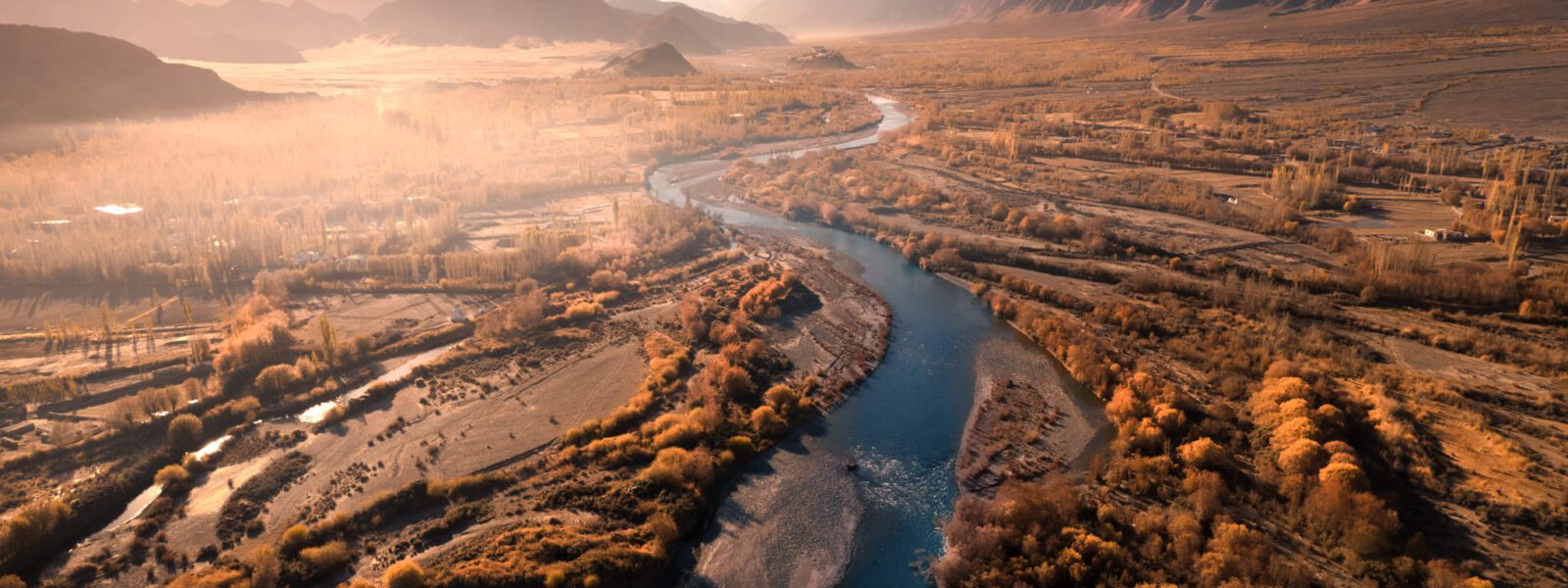
When Ladakh Began to Count Its Own Centuries By Declan P. O’Connor Lead: A Timeline Written in Stone, Ink, and Treaties Why a year-by-year spine matters in a place where memory travels faster than paper To write a Ladakh history timeline with any honesty, you begin by admitting what the landscape does to certainty. Valleys compress distance; winters compress time. A journey that looks brief on a map becomes a slow argument with altitude, weather, and the availability of passable ground. That is why the Ladakh history timeline is best told not as a parade of “great men” or a catalogue of monasteries, but as a sequence of turning points—moments when authority, trade, and borders changed enough that people felt it in their daily decisions. If you are a European reader used to tidy timelines, Ladakh resists that tidiness. Its history often arrives as fragments: an inscription here, a chronicle entry there, a treaty clause that quietly redraws what “belongs” to whom. So the ambition of this Ladakh history timeline is practical: to anchor the story in dates that can be tied to evidence—material traces, recorded events, known dynastic shifts, and documented legal acts. When the sources go thin, the narrative will not pretend otherwise. In a region so often romanticised, restraint is not a lack of imagination; it is a form of respect. The Ladakh history timeline, properly handled, shows how a small kingdom survived by bargaining with larger powers, how a borderland learned to speak the language of treaties, and how the twentieth and twenty-first centuries turned old caravan routes into strategic corridors. What follows is a narrative spine, not a museum label. It moves through the eras that still shape Ladakh’s political reality and cultural confidence: early traces before kingdoms had paper, the emergence of coherent rule, the consolidation under the Namgyal line, the shock of conquest and the paperwork that followed, and the modern legal reorganisation that made Ladakh a Union Territory. Along the way, this Ladakh history timeline keeps returning to the same question: when did power change hands in ways that ordinary people could not ignore? What counts as a “date” here—and what does not In any Ladakh history timeline, “dated” does not always mean “precisely measured.” Some eras are anchored by firm markers—treaties, wars recorded by multiple parties, administrative acts printed and enforced. Other eras rely on chronicles and later compilations that preserve an older memory but also reflect the politics of whoever wrote them down. The point is not to flatten every kind of evidence into one standard. The point is to tell you, as clearly as possible, what kind of evidence supports each stretch of the Ladakh history timeline. Three categories matter most. First, material traces: rock art, inscriptions, fort ruins, and the physical infrastructure of rule. These can show presence and activity, but they rarely give you a clean calendar date without specialist study. Second, narrative texts: chronicles and travel accounts that attempt to order the past into a story, often with dynastic legitimacy in mind. These can be invaluable, but they must be treated as sources with a viewpoint. Third, documentary turning points: treaties and legal acts that define relationships between polities and reshape governance. In the Ladakh history timeline, these documentary hinges often matter more than battles, because they describe what the victors and survivors agreed to live with. In Ladakh, the past is not “behind” you. It is layered beneath your feet—stone under dust under snow—waiting for the brief season when it can be read. This is why the Ladakh history timeline will sometimes slow down at a treaty and move quickly through a century: the treaty is a surviving piece of language that changed reality. It is also why certain seductive phrases and easy myths are left out. Not because Ladakh lacks grandeur, but because grandeur is too often used as a shortcut around evidence. The aim here is a Ladakh history timeline that is vivid without becoming careless. Timeline: Before Kingdoms Had Paper (Prehistoric–Early Historic) Rock art corridors and the oldest habit of passage The earliest stretch of a Ladakh history timeline is the hardest to “date” in the way modern readers expect, and it is also the easiest to sensationalise. Resist the temptation. What can be said with confidence is simpler and, in its own way, more profound: Ladakh preserves extensive rock art—petroglyphs and carved panels—along routes that make sense as corridors of movement. In other words, long before the region was governed by a named dynasty, people moved through these valleys, paused long enough to mark stone, and left traces that later centuries could not entirely erase. For a Ladakh history timeline, the practical implication is that the region’s story begins as movement, not as statehood. The Indus valley and its tributaries did not wait for a king to become meaningful. They were already meaningful because they connected worlds: plateau to plain, pasture to settlement, high routes to lower markets. Rock art suggests not a single “origin” but repeated use—an argument, carved into stone, that Ladakh was never truly isolated. That matters when you later read about treaties and borders: the impulse to connect is older than the impulse to rule. What you should not do in a responsible Ladakh history timeline is pin precise centuries onto rock art without citing specialist dating work. The panels themselves can be described—animals, hunters, symbols, sometimes script-like marks—but the calendar needs scholarship. The honest posture is to treat this era as the deep foundation: evidence of human presence and passage, preceding the first coherent political labels that appear in written sources. In a region where winter can silence even the present, these carvings remind you that the oldest chapter of the Ladakh history timeline is not a tale of rulers. It is a tale of routes. From traces to early legibility: the first steps toward recorded history To move from “presence” to “history” in a Ladakh history timeline, you need legibility: marks that can be tied to languages, institutions, or external references. This is where inscriptions, early fortifications, and the growth of religious networks begin to matter. Not because religion is a decorative feature of the Himalaya, but because monasteries and their patrons often produced the durable records that states relied upon. Where trade creates wealth and monasteries create literacy, the Ladakh history timeline begins to gain dates, names, and claims. Even here, caution is the discipline that keeps the story true. Early historic references to Ladakh and adjacent regions often appear in the context of larger Tibetan and Central Asian worlds. This does not mean Ladakh was merely a passive frontier. It means that the earliest written visibility of Ladakh is frequently mediated—seen through the concerns of wider polities and travellers. The Ladakh history timeline, at this stage, is a developing silhouette: a region becoming visible as it becomes connected to institutions that record, tax, negotiate, and defend. For the reader, the important practical lesson is that early Ladakh should not be treated as a blank space awaiting “discovery.” It was already inhabited, traversed, and culturally active. The lack of a neat early calendar is not proof of emptiness; it is proof of the limitations of surviving documentation. A careful Ladakh history timeline therefore keeps two thoughts together: the region’s deep antiquity is supported by material traces, while the region’s early political narrative becomes clearer only as written sources and institutional records thicken. That is the threshold we now cross. c. 950–1600: Maryul and the Slow Emergence of a Kingdom c. 950 and the West Tibetan frame: how “Maryul” enters the story Many Ladakh history timeline accounts begin around the tenth century because this is when coherent political naming becomes easier to track in the scholarly record: the appearance of “Maryul” as a kingdom associated with the broader West Tibetan sphere. The term matters because it suggests not just geography but an attempt to govern geography. In a landscape where a valley can be an entire world, naming a kingdom is a claim that multiple valleys can be held together under a single political imagination. In the Ladakh history timeline, c. 950 functions less like a single dramatic year and more like a threshold. It marks the period when Ladakh’s political life is increasingly discussed in relation to West Tibetan lineages and their successors. This does not mean the region suddenly sprang into existence. It means that the surviving narrative and documentary threads—what scholars can reconstruct with care—begin to form a more continuous chain. Forts, routes, and religious centres become part of a recognisable pattern of rule. For a European reader, it may help to think of this as the Himalayan version of early medieval state formation: power expressed through control of passes, taxation of trade, patronage of religious institutions, and the ability to keep rival elites from splitting the territory into permanent fragments. The Ladakh history timeline here is not a story of constant war; it is a story of constant negotiation with terrain. And that negotiation, over centuries, produces something durable enough to be remembered as a kingdom. In the decades and centuries that follow, names change, alliances shift, but the underlying challenge remains the same: how do you make authority travel in a place where travel itself is never guaranteed? 1100s–1500s: valleys as political units, monasteries as institutions, trade as leverage Between the early medieval threshold and the later consolidation of dynastic power, the Ladakh history timeline is shaped by three quiet forces: the political signific
source https://lifeontheplanetladakh.com/blog/ladakh-history-timeline/


Comments
Post a Comment