Silk Road Ladakh: The Silk Road Was Never a Road and the Art of Crossing
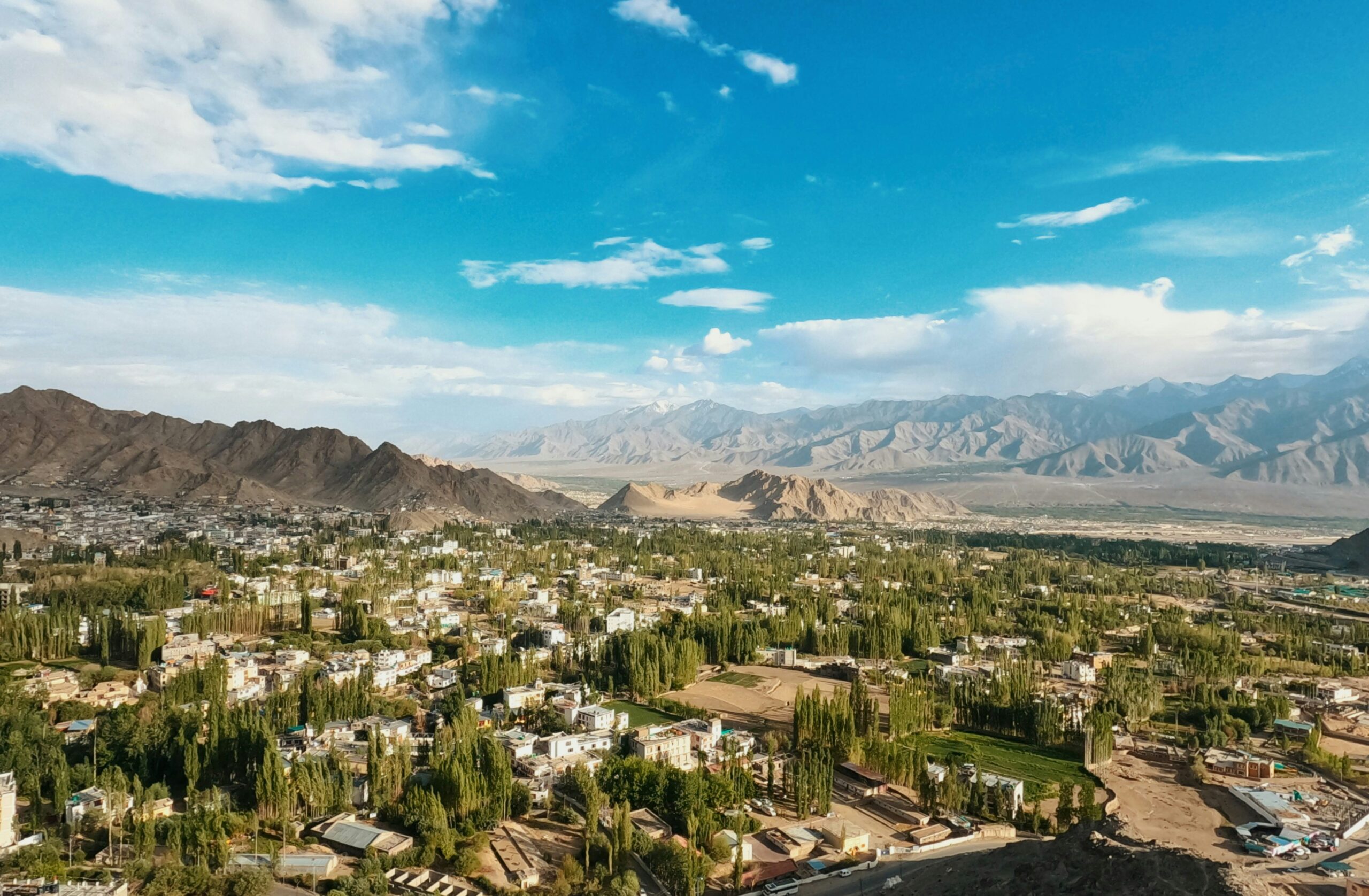
When Movement Followed Memory, Not Maps By Declan P. O’Connor Introduction: Rethinking the Silk Road from the Roof of Asia The Question Ladakh Forces You to Ask The phrase “Silk Road” arrives in the European imagination already varnished: a ribbon of caravans, a clean line drawn from one civilization to another, an antique promise that trade can domesticate distance. Yet Ladakh, once you enter its thin, luminous altitude, has the unsettling habit of undoing tidy stories. The valleys don’t lead you forward; they lead you sideways. The passes don’t connect two points; they turn travel into a negotiation with weather, fatigue, and the politics of whoever controls the crossing this decade. And the most important routes are not always the ones that look impressive on a modern map. They are the ones that can be remembered, repeated, and repaired—by people who know what a winter does to a promise. To rethink the Silk Road from Ladakh is to accept that movement is rarely a straight march toward a destination. It is more often an art of timing, a choreography of waiting, a discipline of choosing which risk is survivable. If you stand in Leh and listen to the old logic beneath the present one, you begin to hear a network, not a road: corridors opening and closing with the season, with the availability of pack animals, with the temper of border guards, with the price of wool in a market you will never see, and with the whispered reputation of a guide who can keep a caravan intact when a storm arrives early. This is why Ladakh matters to the Silk Road story. Not because it offers a museum version of history, but because it reveals the deeper truth the phrase “Silk Road” tends to hide: trade did not flow along a single artery. It pulsed through a system of crossings—high, hard, and human—where the most valuable thing was often not silk at all, but the knowledge of how to get through. From Romance to Reality: A Network of Crossings The romantic Silk Road is a line. The historical Silk Road is closer to weather. It swells, retreats, and reroutes itself. It avoids trouble when trouble becomes expensive. It chooses the known over the heroic. It prefers the pass that is merely difficult to the pass that becomes impossible after the first serious snow. And it depends on nodes—places where exchange can happen, where information can be traded alongside goods, where a caravan can rest without dissolving into disorder. Ladakh was such a node. It sat between Central Asia and South Asia, between the Tibetan plateau and the river valleys that fed into larger economies. It was not simply “on the way” to somewhere else; it was a place where routes were reassembled. Cargo was redistributed. Language shifted. Credit changed hands. News travelled ahead of the goods. And in that sense, Ladakh gives us a more honest grammar for the Silk Road: not a road, but a set of practices. Not a single direction, but a habit of crossing. If you are looking for the simplest version of the story, Ladakh will disappoint you. But if you are willing to read trade as a form of intelligence—seasonal, social, and practical—then Ladakh becomes an essential chapter in the larger history of ancient trade routes. It teaches you that the Silk Road was never a road. It was an argument between geography and human persistence, conducted across ridgelines and riverbeds, and settled—again and again—by people who learned how to cross. The Illusion of a Single Road The Modern Myth of the Silk Road There is a particular comfort in imagining history as a highway. It flatters our sense of progress. It suggests that civilizations met because they were always meant to meet, that distance is a problem technology solves, and that commerce is naturally drawn to a single route the way water is drawn to gravity. In European retellings, the Silk Road becomes an elegant corridor, a neat exchange of luxury and ideas, a kind of ancient globalization without the modern discomforts. But the myth is built on an anachronism: the expectation that movement should be reliable. For most of history, reliability was a privilege, not a baseline. A “route” could be a promise that lasted only as long as the next winter, the next conflict, the next drought that emptied pastures and weakened animals. The Silk Road, as people now use the phrase, is a retrospective label applied to a changing set of paths. It is a story we tell after the fact, when the messiness has been edited out. Ladakh exposes the editing. Its terrain does not allow you to forget that travel is conditional. A pass can be open and still be unwise. A valley can be passable and still be dangerous if the wrong local power has decided to take interest. A caravan can leave on time and still arrive late, because “on time” in the mountains is only a polite guess. When we reduce the Silk Road to a single line, we also reduce the people who travelled it: we turn them into figurines in a diorama rather than agents making continuous decisions under pressure. So the first correction Ladakh offers is moral as much as historical. It asks us to respect the uncertainty that shaped trade. It asks us to treat ancient trade routes not as a fixed infrastructure but as a living improvisation—a human response to a world that refused to be stable. Why the Silk Road Was Always a Network Networks are not romantic in the way roads are. Networks are messy. They involve redundancy, detours, and contingency. They require trust to move value across distance. They depend on nodes where information can be updated and mistakes can be corrected. In the highlands of Asia, a network was not a luxury; it was survival. If one corridor closed, another had to open, even if it was longer, harsher, or less profitable. Ladakh belonged to this logic. It sat at the intersection of routes leading toward Central Asia, toward Kashmir, and toward the Tibetan plateau. Its role was not to offer a single passage but to participate in a system where multiple passages existed, each with its own season, risks, and political conditions. The very idea of a “primary route” was fluid. What mattered most was not the prestige of a path, but the probability that the crossing could be completed. This is why the language of “corridors” is more faithful than the language of “roads.” A corridor implies width and variability. It allows for alternative tracks, for shifting campgrounds, for changes in pace dictated by animals and weather. A corridor also implies control: someone always claims authority over the crossing, whether through taxation, protection, or intimidation. In Ladakh, the corridor was not simply a geographic feature. It was a political and social fact, written into who travelled, what they carried, and how they paid to pass. Seen this way, the Silk Road becomes less like a line and more like a set of questions: Which corridor is open? Who controls it? What can be moved safely this season? Who can be trusted to guide, to interpret, to extend credit, to offer shelter? Ladakh, with its layered routes and high-stakes crossings, answers these questions in the only way mountains permit: case by case, season by season, and never finally. Ladakh as a High-Altitude Crossroads Leh: A City Built on Waiting and Exchange Leh, from a distance, can look like a quiet town holding still in the dry clarity of the Indus valley. But historically, its stillness was a kind of concentrated motion. It was a place where movement paused so that movement could continue. Caravans did not simply pass through; they reorganized themselves. Traders arrived with goods shaped by one economy and left with goods shaped by another. Languages overlapped. Measures and weights had to be reconciled. Credit was arranged. News was traded with the seriousness of a commodity. A crossroads city does not thrive because it produces everything; it thrives because it makes exchange possible. In Leh’s case, the exchange was more than material. It was cultural and procedural. The procedures—how to hire animals, how to find reliable guides, how to secure a safe place to store goods, how to handle disputes—were part of the city’s value. The art of crossing required institutions, even informal ones, and Leh offered them in a landscape where institutions were otherwise scarce. In European terms, it may help to think of Leh less as a “remote town” and more as a high-altitude port. Ports are where routes converge, where delay is normal, where the horizon of commerce is always elsewhere. A port is also where people learn to live with uncertainty. And that is one of Leh’s historical signatures: it trained traders and travellers to treat uncertainty not as a crisis but as the ordinary condition of movement. This also explains why the Silk Road narrative feels different when told from Ladakh. The story is not primarily about dramatic arrivals; it is about the patient work of making the next crossing possible. Leh’s greatness, in that sense, was quiet. It was logistical. It was the greatness of a place that understood that trade is not only about goods. It is about continuity. The Indus Valley as a Spine, Not a Highway The Indus valley, in Ladakh, is often described as a corridor—and that is accurate, as long as we resist the temptation to imagine it as a modern road. Historically, the valley functioned as a spine: a structural support from which routes branched out, and to which routes returned. It offered a relatively stable axis in a region defined by extreme variation. Water, settlements, and arable land clustered along it. This made it a natural place for staging: gathering people, animals, supplies, and information before taking on the more volatile crossings beyond. But a spine is not the same as a highway. A highway assumes speed and standardization. A spine assumes flexibility. From the Indus valley, the movement of trade could pivot north toward Nubra and onward to Central Asia, or east onto the plateau
source https://lifeontheplanetladakh.com/blog/silk-road-ladakh-crossing/


Comments
Post a Comment