Six Lakeside Villages Where Pangong Reveals Its Quietest Stories
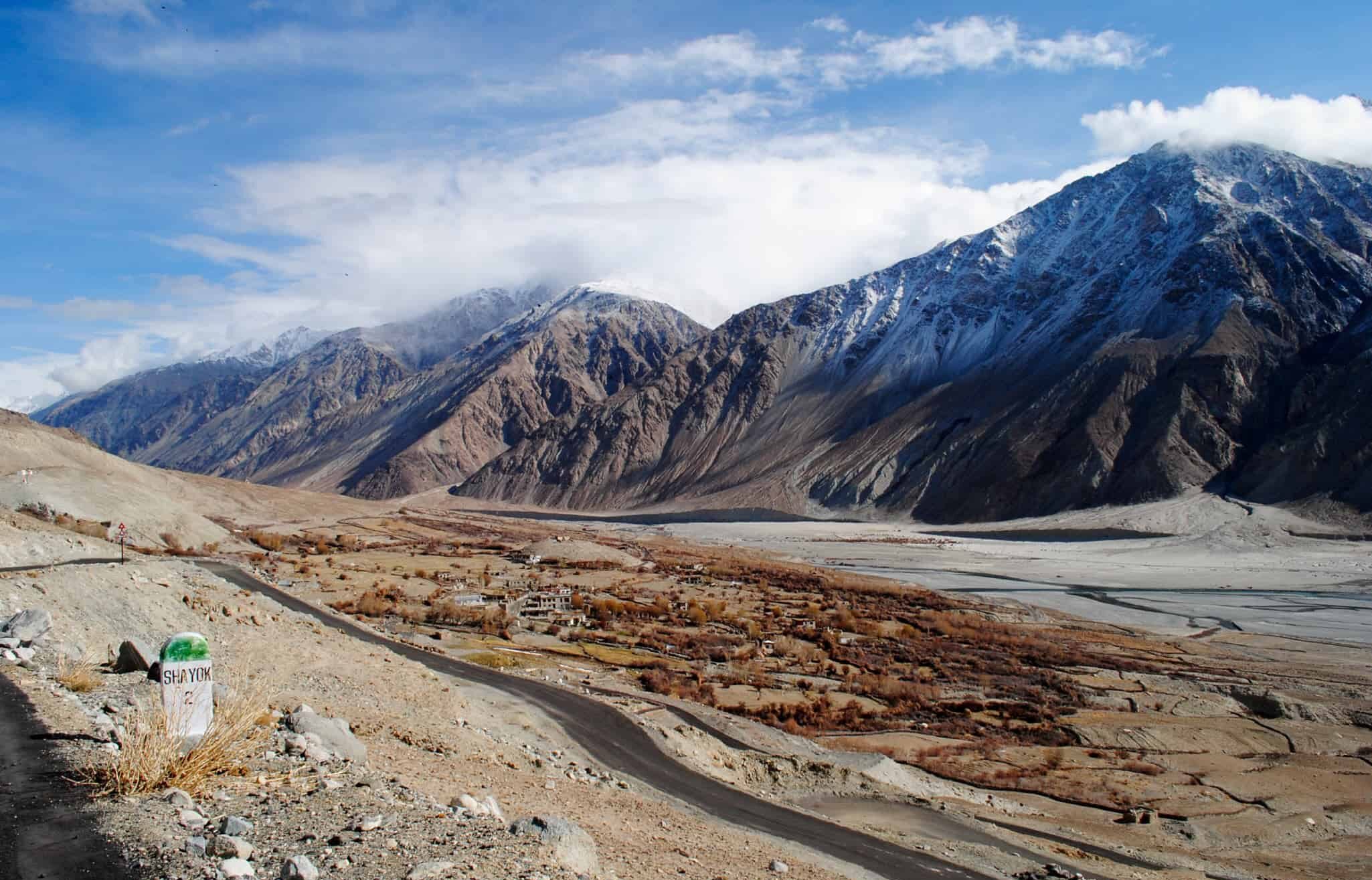
Where the Stillness of Pangong Shapes the Traveler’s Imagination By Declan P. O’Connor 1. Prologue: A Lake That Remembers Before You Arrive The thin air, the long road from Tangtse, and the quiet threshold where stories begin There is a particular point on the road beyond Tangtse where conversation fades without anyone agreeing to fall silent. The vehicle keeps moving, the engine still hums, but something in the air becomes so thin and insistent that words feel clumsy. The sky widens, the colours drain from the familiar spectrum of browns and blues into something more severe, and you realise you are no longer just going to a lake—you are entering a kind of listening chamber. Pangong Lake, for all its fame on social media and in glossy brochures, remains first and foremost a place of long echoes. The silence does not simply surround you; it presses gently against your ribs, asking if you are really ready to hear what it has to say. For most European travellers, the journey up from Leh has already rearranged the internal map. Days of acclimatisation, slow climbs over high passes, cups of sweet tea taken in homestays and roadside cafés: all of it has been a rehearsal in slowing down. Yet the final approach to Pangong feels different. It is as if the previous kilometres belonged to the human world—villages, monasteries, checkpoints—while the last stretch towards the water belongs to the lake itself. Tangtse, that quiet town with its stream and stupas, is the last place where you feel history and geography balanced. Beyond it, the land appears to tilt towards something older and less negotiable. You are not only gaining altitude; you are moving into a corridor where your own thoughts will sound louder, stripped of background noise. In that sense, the threshold to Pangong is not marked by a signboard or a dramatic bend in the road but by a shift in interior weather. Your mind, used to filling every gap with noise and planning, suddenly finds itself outpaced by the landscape. The lake is still out of sight, but its presence can be felt, like a memory waiting at the edge of consciousness, ready to be recognised when the blue finally appears. How the high-altitude silence becomes a character in the narrative High-altitude silence is often mistaken for emptiness, a kind of blankness in which “nothing happens.” Yet in the villages around Pangong Lake—Spangmik, Man, Merak, Phobrang, Lukung, and Tangtse—that silence behaves more like a character than a backdrop. It has moods. It intervenes in conversations. It enlarges certain moments and erases others. You notice it first in the gaps between mundane sounds: a kettle boiling in a kitchen, a child chasing a dog across a courtyard, a distant truck grinding up the road. When those sounds fade, what remains is not absence but a presence that seems to lean in, attentive. For the traveller who comes from dense European cities, where the hum of traffic and the glow of screens provide constant accompaniment, this can be disorienting. The stillness around Pangong is not simply a quieter version of what you know; it is a different order of experience. The lake’s surface can sit motionless for minutes, then suddenly respond to an invisible gust of wind, as though reacting to a question you did not know you had asked. In the same way, your thoughts slow, then surge, then fall back again. Stories you have told yourself about who you are and what you want to do with your life begin to sound different at 4,300 metres. In these conditions, silence offers not an escape from narrative but a chance to hear it more clearly. You become aware of what you usually use noise to avoid confronting: uncertainty about work, unresolved conversations, anxieties that felt solid but suddenly appear negotiable. The villages around Pangong do not demand that you have answers. They simply refuse to distract you from the questions. The quiet becomes a companion, sometimes comforting, sometimes confrontational, always present. When you later remember your time here, you may recall the colour of the water and the taste of butter tea, but what will linger longest is the quality of the listening you were forced into—by the lake, by the altitude, and by the long hours in which there was nothing to do but pay attention. 2. The Geography of Quiet: Why These Six Villages Matter A shoreline shaped by wind, time, and pastoral rhythms Look at a map of Pangong Lake and you see a narrow, elongated strip of blue straddling a contested border. Look more closely, and the shoreline begins to reveal small indentations, valleys, and bends where human settlement has found a precarious foothold. Spangmik, Man, Merak, Phobrang, Lukung, Tangtse—each rests at a slightly different angle to the lake, to the wind, and to the patterns of pasture that have sustained life here for generations. Geography, in this part of Ladakh, is not a static backdrop; it is a series of negotiations between stone, water, animals, and people. The lake itself behaves like a slow-moving mirror, changing its shade of blue or green depending on the hour and the weather. Villages on its shore sit like punctuation marks along a long sentence of water. Lukung, at the gateway, catches the first wave of visitors and returning traders. Spangmik, just beyond, becomes the place where most journeys turn into overnight stays, where tents and cottages dot the barren ground. Man and Merak, further along, are quieter clauses in that sentence, where the rhythm of life is dictated more by yaks, sheep, and school timetables than by arrival times of cars. Phobrang, slightly inland and closer to the routes that once mattered for trade and movement, feels like an ellipsis—suggesting other histories just out of sight. Tangtse, slightly away from the main shore but part of the same basin, offers a comma, a pause in the climb and a place to breathe. These are not villages that have grown according to any urban plan. Their shape is dictated by access to water, shelter from the wind, and the availability of flat ground in a landscape that resists straight lines. Each place offers a different vantage point on the same body of water, and each, in turn, reflects back a slightly different story of how humans learn to live with altitude. Some travellers treat these stops as interchangeable—just names on an itinerary. But if you watch closely, you begin to see how the geography of each village creates its own tempo: when children play, when animals are moved to pasture, when smoke begins to rise from kitchen chimneys. The quiet is not uniform. It is as varied as the contours of the shore itself. The subtle social world of Pangong’s eastern settlements Although the landscape around Pangong often feels immense and sparsely populated, the social world of its villages is surprisingly intricate. Families are linked by marriages that cross from one settlement to another, by shared grazing rights, and by the practical realities of surviving long winters together. Conversations in kitchen-cafés and guesthouses often turn not to abstract politics or distant headlines but to water, fodder, schooling, and roads—the basic infrastructure that makes a future here imaginable for the next generation. European visitors sometimes arrive with an image of the lake as a kind of high-altitude wilderness, untouched and isolated. But sit for an afternoon in a homestay in Man or Merak, and you begin to understand that these are not remote outposts forgotten by time. They are communities in motion, negotiating the pressures of tourism, military presence, climate shifts, and the aspirations of young people who scroll through the same global feeds as their peers in Berlin or Barcelona. A teenager might help her parents serve tea in the guesthouse, then later watch music videos on a phone whose signal depends on the mood of a distant tower and the weather. In such a setting, hospitality is not a performance for visitors; it is part of a social code that extends inward as much as outward. A visitor accepted into a kitchen is expected to take part in the gentle choreography of conversation: answering simple questions about home, work, and family, then listening in return. Stories are exchanged alongside butter tea and momos, and the boundaries between guest and host become slightly blurred. In Spangmik and Lukung, where tourism is most visible, this dynamic is complicated by the constant flow of short-stay visitors, yet the underlying ethic remains. People watch how you move through their village, whether you greet elders, whether you step carefully around animals and children. In a world where the landscape appears vast and impersonal, the social fabric is intimate and finely attuned. Eco-fragility, altitude ethics, and the responsibility of moving slowly To travel along Pangong’s shore without considering the fragility of the ecosystem is to misread the entire landscape. The lake sits in a cold desert where water is both dominant and scarce, where a single broken pipeline or poorly conceived construction project can alter patterns of life more dramatically than an extra wave of tourists in any European capital. The soil is thin, the vegetation sparse, and the margin for error small. What looks like empty land is in fact finely calibrated grazing territory on which animals depend, and by extension, the households that rear them. There is an emerging ethics of altitude that thoughtful travellers are beginning to adopt—one that recognises that every choice, from the number of nights spent in a single place to the kind of accommodation chosen, has consequences. Staying longer in one village rather than ticking off several in quick succession reduces the strain of constant turnover and offers hosts a more predictable rhythm. Choosing homestays or small guesthouses over large, resource-heavy camps can limit the ecological footprint. Walking short distances instead of insisting on being driven adds
source https://lifeontheplanetladakh.com/blog/pangong-villages-ladakh-lakeside-stories/


Comments
Post a Comment