Ladakh: Where Winter Lingers Long Enough to Learn to Ski
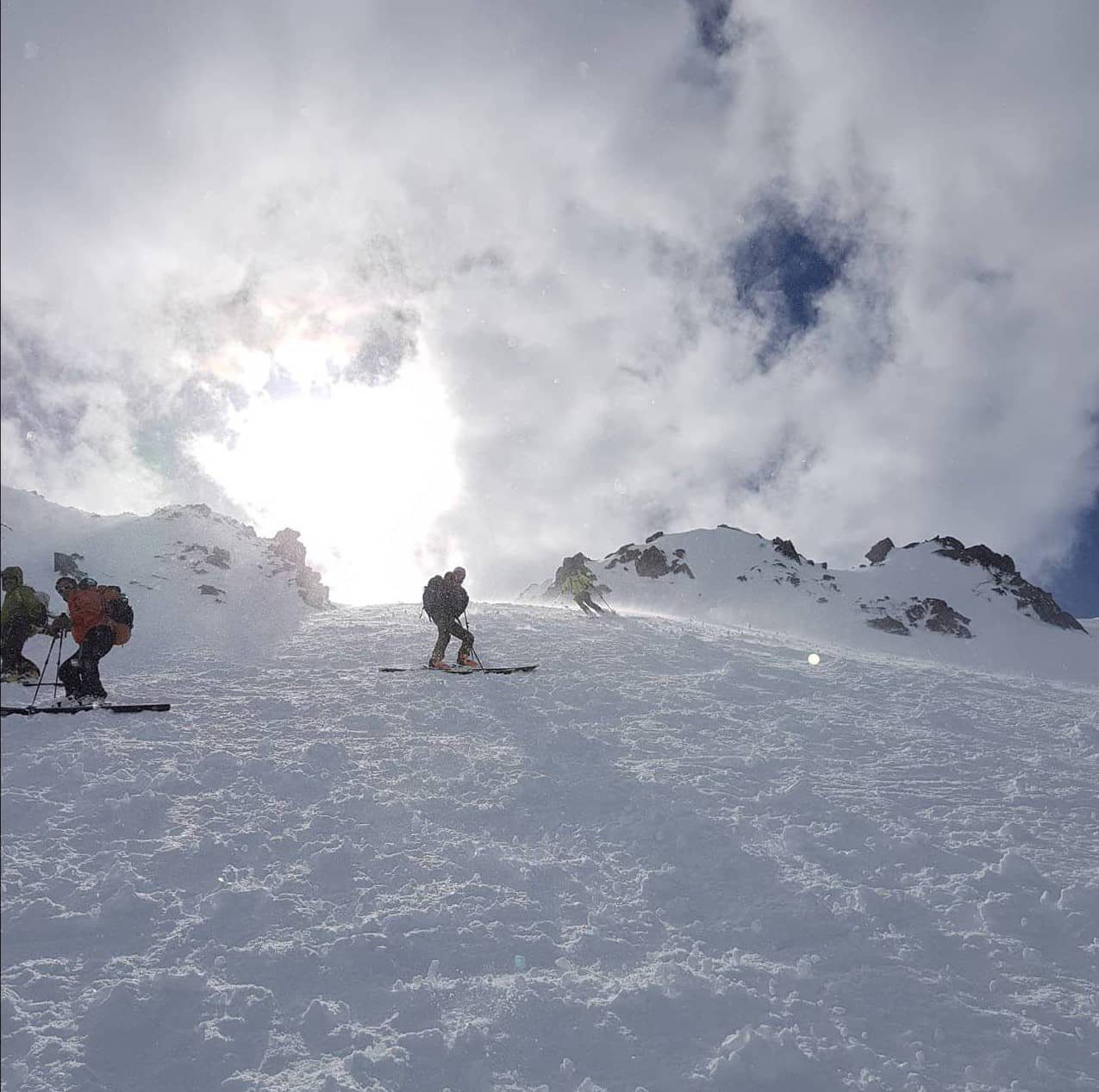
In Drass, Winter Stays on the Slope By Sidonie Morel The town that measures time in snow Morning on the Kargil road Drass sits along the Srinagar–Leh road, the long seam that stitches Kashmir to Ladakh. In summer, it is a place you pass through with the windows down, counting apricot trees where you can. In winter, the same route narrows into a corridor of caution: tyres fitted for cold, engines left running a little longer, tea poured before anyone says what they came for. The town’s name travels ahead of it, often delivered as a warning—cold, colder, coldest—yet the fact of Drass is less theatrical than the reputation suggests. Cold here is not a story; it is a condition. It changes how people stand, how they hold a cup, how they wait for a door to open. The snow does not arrive like a curtain. It arrives in increments, a little more each night, and then one day the town wakes to the same palette repeated: roof, wall, field, riverbank, all adjusted to white. The river moves somewhere under it, audible in places where the surface is thin. Footprints appear and then disappear. The work of winter is not the storm; it is the maintenance that follows—shovels, packed paths, the tidying of edges so that the day can proceed. In Drass, the most revealing details are the small ones: the grit scattered at corners, the way the shopkeepers keep the threshold clear, the quiet insistence of wool and rubber in every doorway. By late season, snow becomes an archive of movement. A narrow track where people have learned, collectively, where it is safest to walk; a wider strip where vehicles have shaved the surface into hard ridges; a soft drift that no one touches because it marks a ditch. These are not romantic observations. They are the town’s instructions, written each morning and revised by afternoon. Winter that refuses to leave The surprise—especially for visitors arriving from Europe with a neat idea of winter’s end—is how long the snow remains useful. Drass does not turn on a spring switch. While other valleys begin to show brown edges and a loosening of surface, Drass can still hold its snow well into April. Local skiers speak of coverage that stays deep when the sun is already climbing higher, and of days when the snow softens enough to make practice kinder without collapsing into slush. There is talk, too, in the language of plans and feasibility studies, of a season that might stretch from early winter through mid-May on the slopes above the town. This is where the idea of skiing in Drass begins to feel less like a novelty and more like a simple consequence of geography. The snow remains; people look at it differently. A slope that has always been “there” becomes a place of repetition and learning. Winter stops being only something to endure and becomes something to use—carefully, deliberately, without pretending it is easy. Manman: a slope that behaves like a classroom Above town, a practical kind of wide The Manman slopes sit above Drass with the plain logic of terrain that has always been waiting. They do not announce themselves with infrastructure. They offer space. That matters more than it sounds. Many ski stories begin with equipment and access; in Drass, the beginning is the shape of the land and the quality of snow under a boot. The slope is generous, wide enough to allow a beginner’s awkward zigzags without forcing anyone into the edge. It is the sort of incline where you can watch a learner try the same turn ten times and still have room for another person to pass. On a clear day, the valley reads like a map: the road’s thin line, the clustered roofs, the river’s pale curve. The view is not the point, but it helps you understand why the place is being discussed seriously. A training ground needs visibility in two senses: seen by those who might come, and legible to those who must manage safety. When officials and local associations speak about Manman, they speak in the vocabulary of necessities: lifts, grooming machines, equipment, a formal academy that can regularise training and lower the barrier for those who cannot afford long trips elsewhere. It is a language that belongs to budgets and tenders, but it is also the language that turns a slope from a rumour into a place where people can return every winter and build skill over time. The slow work of building a winter sport A ski destination is often sold as an instant product. Drass is not in that business, at least not yet. What is taking shape is closer to a community project, one that has to accommodate Ladakh’s realities: distance, cost, the uneven availability of gear, the fact that winter travel is never simply a matter of desire. The ambition is clear. The proposals around Manman describe the elements that would make the slope more reliably usable: a lift system—whether chairlift or draglift—so that training is not limited by how many times a person can climb back up; grooming equipment that can maintain a consistent surface; a supply of skis, boots, poles, and protective gear; instructors trained not only in technique but in teaching. On paper, these are standard requirements. In Drass, they read as a list of missing pieces that would allow something already present—snow, slope, interest—to develop into a routine. It is not hard to see why the conversation has momentum. In many parts of the Himalaya, winter sports are constrained by access to established resorts. In Ladakh’s Kargil region, a practical argument repeats: if Gulmarg is not easily reachable, if it is expensive, if political and logistical realities shape who can go and when, then there is value in building local options. That argument is not framed as rivalry. It is framed as competence—developing a skill set, offering youth a winter activity with structure, and keeping winter from being only a season of limitation. Learning here means learning differently Instruction with no impatience Ski lessons in Drass do not come wrapped in a hospitality package. They come in the form of camps and training sessions that look more like a school day than a holiday. When the Kargil Battle School in Drass hosts an adventure ski camp—one of those winter programmes designed to teach the basics—what is emphasised is fundamental movement: gliding, turning, stopping, travelling across a slope without losing control. The vocabulary is simple, even blunt. It has none of the marketing gloss that European skiers have learned to ignore. Watching a beginner learn these basics in Drass is instructive because it exposes what we often forget about skiing: it is not a natural act. It is a series of decisions made quickly by a body that is still negotiating its relationship with balance. In a camp setting, the instructor’s role is not to provide thrill; it is to provide order. Where to stand. How to angle the skis. What to do with the poles when you do not yet know how to use them. How to stop in a way that does not panic the person behind you. The teaching is patient because it has to be. Many learners are not arriving with private lessons and rented equipment. They are arriving through a local network of opportunity: a programme announced, a slot available, skis shared, boots that may not fit perfectly. That constraint shapes the teaching style. It favours repeatable drills and careful progression. The goal is not elegance; it is competence that can survive the next attempt. Falling as part of the method In the Manman area and similar slopes, falls are not treated as embarrassing. They are treated as data. A learner falls because the skis crossed, because weight shifted too abruptly, because the snow changed texture between shade and sun. Each fall creates a small disruption in the surface, and then the person stands up and the instruction resumes. The slope collects these marks—parallel scratches, shallow trenches—until it looks like a page that has been erased and rewritten. There is a particular sound to a beginner’s day on snow: the scrape of edges, the soft thud of a fall into powder, the sharper knock when the surface is compacted by cold nights. In Drass, where winter can be severe, the snow often shifts through a range of textures in a single day. The morning may be firm, the afternoon more forgiving, and then the surface tightens again as the light drops. Learners adapt without necessarily naming what they are adapting to. It becomes instinct: one kind of turn here, another there, a slower line where the snow is brittle. This is why the idea of Drass as a place where winter “lingers long enough” has weight. It is not about the novelty of skiing in a cold town. It is about time. Time to repeat. Time to make mistakes. Time to practise without the pressure of a short holiday window. Time for a local winter sport culture to form, one session at a time. The question of access, quietly present in every plan Why local slopes matter in Ladakh In Europe, skiing has long been tied to infrastructure: roads maintained for tourists, a reliable system of rentals, lifts that turn a mountain into a machine. In Ladakh, the equation is different. Winter access is never guaranteed, and even when roads open, the expense of travel can turn a sport into a luxury. The value of Drass lies partly in its location within the Kargil district and its connection to the road network that already exists for other reasons. When people speak about developing skiing in Drass, they rarely speak in the language of “destination.” They speak in the language of “facility” and “training.” The intention is to create a place where skills can be developed locally, rather than relying on distant resorts. That intention is visible in the way training programmes are designed and in the way official discussions describe what is required: not a spa, not a shopping street, but lifts, grooming, equipment, coaching. It is also visible in the way nearby names appear in the conversation. Lamochan and Goshan are mentio
source https://lifeontheplanetladakh.com/blog/drass-ski-ladakh/


Comments
Post a Comment