Season Is Not Décor: Ladakhs Living OS
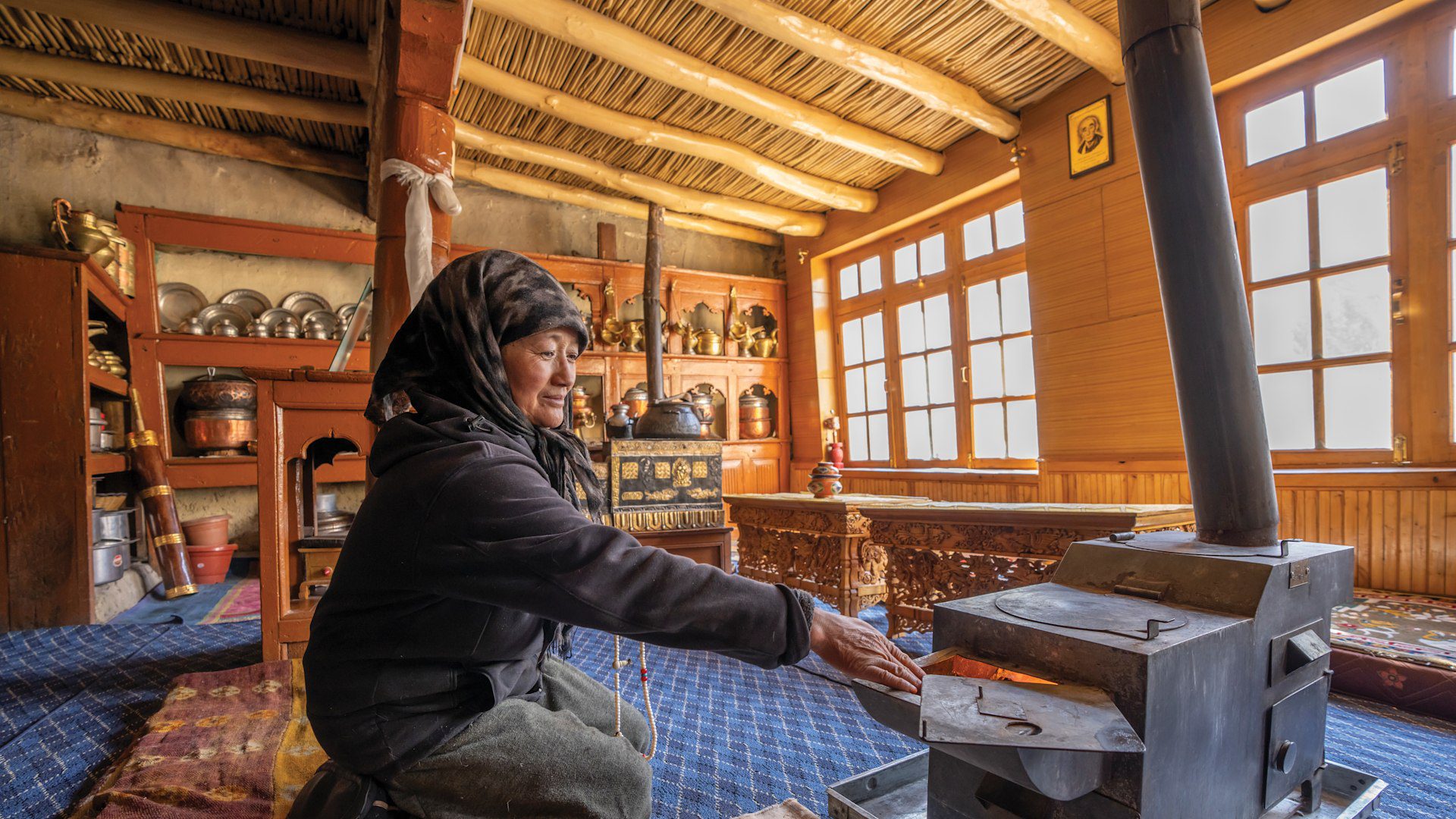
When the Month Rewrites the Household By Sidonie Morel Before the snow commits The first changes happen indoors In Ladakh the season rarely arrives with ceremony. The sky can be perfectly clear, the sun sharp enough to make stone look polished, and yet the house has already started acting as if winter has signed its name. A pot stays on the stove rather than being washed and put away. The kettle is kept within reach. A blanket is folded and moved closer to the one chair that gathers everyone without being assigned to anyone. The edits are small, almost modest, but they are deliberate. Doors are closed with a different speed. The pause at the threshold shortens: shoes off, step in, latch. You notice the movement more than the talk. People pass through the warmest room in tighter loops—stove to storage, stove to bedding, stove to the table—like a household narrowing its range without announcing why. Visitors often photograph this moment as atmosphere: steam, apricots, wool, the quiet of a high-altitude desert afternoon. But the charm is incidental. What you are seeing is a system preparing to run under new rules—seasonal living Ladakh not as a slogan, but as domestic practice that alters time, appetite, and distance. Taste, path, and the day’s default settings Taste changes early because it is where the body negotiates with the climate. A cup of tea in Ladakh is rarely a decorative pause. Often it is salted and warm, and it arrives like a tool: heat that can be swallowed, fat that steadies energy, salt that helps the body keep water. Butter tea is sometimes described as a cultural curiosity. In a winter house it is also a practical solution, repeated because it works. The house’s pathways change too. In summer a home can afford inefficiency: extra trips, open doors, rooms used for their own sake. As winter approaches, movement tightens into fewer routes. The warm place becomes a center not because anyone declares it so, but because warmth is expensive. A phone is charged closer to heat. Homework is brought nearer the stove. Grain and dried food are stored where hands can reach without lingering in the cold corner of a room. Even conversation shifts, and it does so quietly. The day’s talk grows practical: water availability, road conditions, what must be fetched and what can wait. There is gossip, as in any village, but it travels on the same channels as information—kitchens, courtyards, shared work. The season does not hang on the wall. It runs underfoot, and it rewrites what the day assumes. The winter update: Ladakh’s household logic Heat is not a mood; it is choreography The warmest room in a Ladakhi home is not necessarily the prettiest; it is the room that can be defended. A stove is fed, ash is cleared, fuel is kept dry. The furniture arrangement is not an expression of taste so much as an argument with physics: you place your life where it will not waste heat. In a European city apartment, “comfort” is often a single setting on a thermostat. In Ladakh comfort is assembled by hand, day after day, and the result is uneven by design. One corner is warm enough for reading; another corner is for storage and quick tasks. A child learns where to sit to write. An older person chooses the spot that keeps the knees from stiffening. A guest is placed close enough to warmth that the visit can last. Clothing follows the same logic. Layers are not outfits. They are settings. A shawl is chosen for weight and coverage, not for what it “goes with.” Socks are selected because feet that cool down are hard to warm again. The details can look picturesque to an outsider—the heavy wool, the careful wrapping—but their purpose is blunt: to keep the body capable of work when the air is unforgiving. Food as infrastructure, not entertainment When winter begins to dominate the calendar, kitchens move toward reliability. The point is not variety. The point is to avoid waste and to keep the body steady with what can be stored and cooked without constant foraging for ingredients. Barley sits at the center of this logic, not as a romantic “heritage grain,” but as dependable fuel. Apricots, dried and stored, are not a garnish but a form of planning. A pot of cooked grains or lentils can become tomorrow’s meal with less fire, less time, less exposure to cold. In the colder months you notice the value of anything that reduces decision-making. A household that can cook in batches avoids repeated cycles of heating and cooling. A broth kept warm on the stove becomes a base for multiple meals. A jar of fat is not a guilty secret; it is a store of energy. The story of Ladakh in winter is often told through landscapes and monasteries. The more accurate story is told through lids, ladles, and the discipline of keeping a kitchen running when water and fuel have limits. These limits are not abstract. They appear in the simple question of whether you can wash a pot immediately or whether the water must be saved for something else. They appear in how bread is handled: sliced and stored to keep it from drying too quickly. They appear in the way tea is offered and refilled, because staying warm is easier than becoming warm again. Water: the strictest permission setting When water becomes scheduled, spontaneity ends If heat teaches a household to gather around a center, water teaches a household to plan. In many Ladakhi villages and in parts of Leh’s older neighborhoods, winter water is a negotiation: pipes freeze, flow slows, supply becomes uncertain. Even in places with improved infrastructure, cold has its own authority. Water arrives when it can, not when you prefer. This is where the season’s authority becomes unmistakable. Laundry is adjusted. Washing is postponed or simplified. Cleaning is done in smaller, more targeted acts. The idea of an abundant, always-available tap—one of the quiet foundations of modern city life—simply does not hold. A household becomes attentive to the cost of each liter, not as an environmental performance, but as a direct response to reality. When water becomes scheduled, the household’s language changes. People speak in timing: later, tomorrow, when it comes, after we fetch. Tasks are grouped. Containers are chosen for their usefulness rather than their looks. The day’s rhythm tightens, because you cannot scatter your chores across time when the resource you need may disappear by mid-afternoon. What “resilience” looks like at ground level Resilience is an overused word in travel writing. In a winter household, resilience is not a heroic posture. It is a shelf placed where it prevents a spill. It is a bucket kept clean because you may need it quickly. It is the habit of closing a door without slamming it, so the latch holds, so the cold stays out, so the stove’s work is not wasted. It is also social. When resources are constrained, people watch each other’s routines. They notice who has gone out too often. They pay attention to the older neighbor who might need help carrying water or fuel. In a place where winter can isolate homes, small assistance becomes a form of shared infrastructure. The season’s “OS update” is not only personal; it is communal, stitched into observation and proximity. This is one reason seasonal living Ladakh does not translate cleanly into the language of “minimalism” or “simple living.” It is not a curated reduction. It is a practical system shaped by altitude, cold, and availability—and then refined by the habits of people who have lived with those conditions for generations. Why cities feel seasonless, even when they are not One operating system all year In many European cities, the environment is managed so well that the season becomes background. Indoor temperatures hold steady. Lighting stays consistent. Grocery supply is constant. Transport runs on a schedule that does not ask much of the body besides punctuality. The result is a subtle illusion: that life can continue under one operating system from January to December. This is not an argument against comfort. It is an observation about what comfort hides. When your apartment is always warm and your food is always available, the small prompts that would normally change behavior are softened. You can eat the same meals in December as in June. You can dress out of habit rather than out of necessity. You can arrange your home once and leave it untouched for years. Season then turns into décor: a candle, a scarf, a seasonal menu item. The surface changes; the defaults do not. And because the defaults do not change, people often experience a low-grade friction that feels personal—fatigue, restlessness, sleep that refuses to match the clock—when it is partly environmental mismatch. The body still responds to light, temperature, and humidity, even if the home is designed to pretend otherwise. The quiet cost of never updating A seasonless routine can become oddly rigid. The same commute, the same meal planning, the same evening habits. When the outside world changes—days shorten, air dries, rain comes earlier—the interior routine does not adjust. People then rely on willpower to compensate, as if discomfort were a moral issue rather than a practical one. In Ladakh, winter does not allow this confusion. The house must change because the conditions change. If you ignore the season, you pay quickly: cold body, wasted fuel, frozen pipes, spoiled food. The season forces the update. Cities do not, and so the update must be chosen deliberately if you want it. A monthly season update day Small edits that make the next month easier You cannot transplant Ladakh into a European apartment, and you should not try. The point is not imitation. The point is to restore a habit that modern interiors have removed: the habit of letting the month alter your defaults. One practical way is to choose a single day each month as an update day. Not a “reset,” not a makeover, not a performance. A small recalibration that makes the
source https://lifeontheplanetladakh.com/blog/ladakh-seasonal-living-season-is-not-decor/


Comments
Post a Comment