The Road Beyond Khardung La: Entering Nubras Living Silence
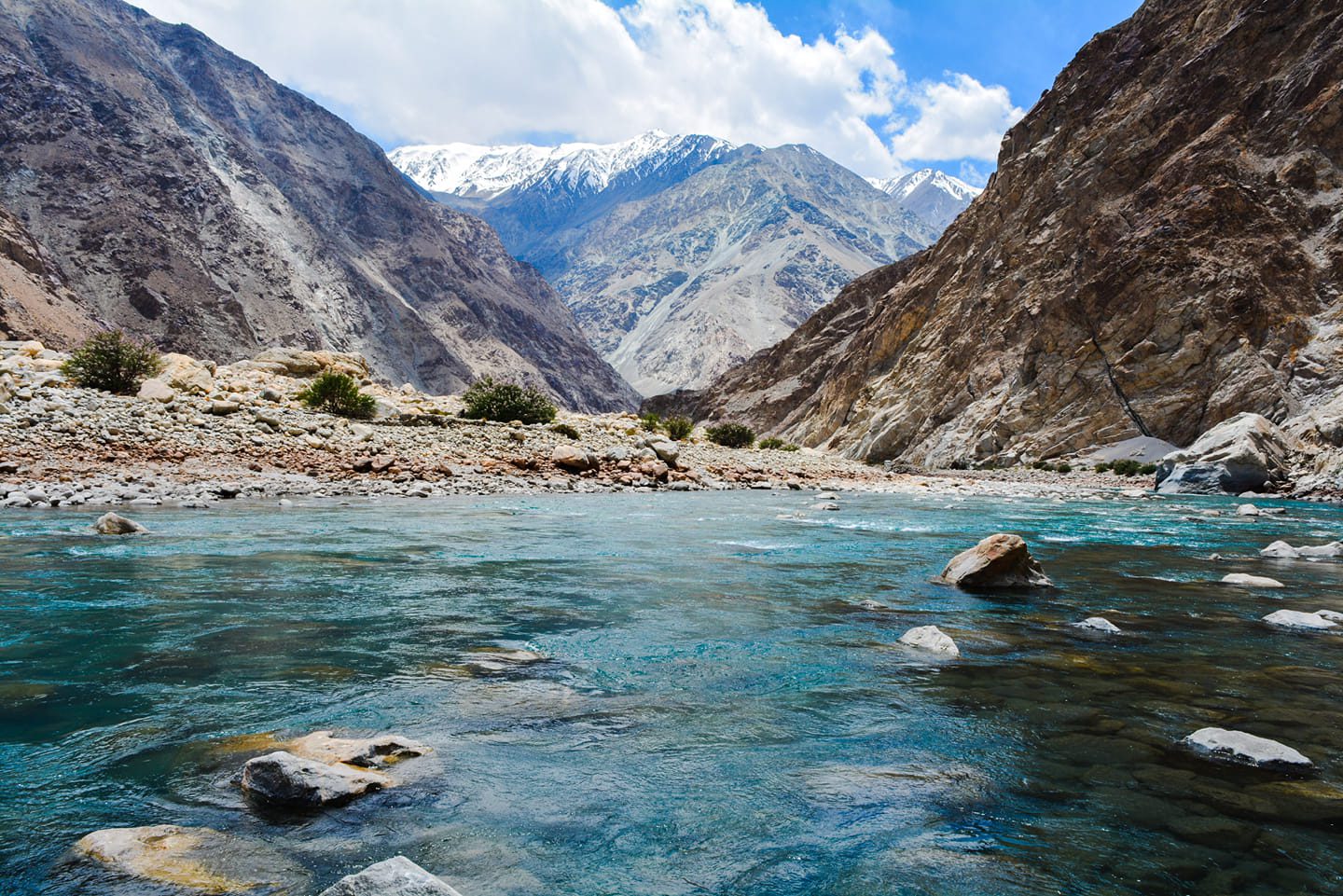
When the Pass Opens, Nubra Begins By Sidonie Morel Leh at Dawn, When Engines Sound Like Prayer Wheels Cold metal, warming hands, and the first sip before the climb In Leh, the morning begins at the edges: a door latch, a kettle lid, a dog lifting its head and deciding whether the day is worth a bark. In winter it feels sharper, in summer it feels thinner, but either way the first light comes quietly, turning the dust in the air into something you can see. A driver checks the tyres without ceremony, palm pressed to rubber as if reading temperature. A second car idles a few metres away. The sound is ordinary—engine, cough, idle—yet at this hour it carries down the lane like a small procession. Before you leave, there are the practical acts that look like habits but are really preparation: a scarf folded and re-folded, a phone cable found, water bottles set where a hand can reach them without looking. In Ladakh, a road day is rarely “just driving.” You are moving through altitude and weather and checkposts, and sometimes through other people’s ideas of what is safe. It is why the car feels like a room as much as a vehicle: it holds your layers, your snacks, your permits, the spare pair of gloves you think you will not need until your fingers decide otherwise. The primary keyword, Nubra Valley road trip, belongs here not as a label but as a fact. From Leh, it begins in plain daylight: the climb out of town, the last clusters of shops, then the road tightening, taking its first turns as if testing your attention. The air has its own dryness, the kind that makes lips notice themselves. The windscreen collects fine grit. A small cloth appears; someone wipes the glass without speaking, as naturally as brushing flour from a kitchen table. Permits, checkpoints, and the quiet choreography of leaving town On the way toward Nubra, the formalities arrive early and without drama. An entry in a ledger. A brief glance at faces. A paper held flat in a hand so it does not flap away. For travellers, it can feel like interruption; for the people who live with it, it is simply part of the landscape. You pass through it as you pass a bridge or a bend: slowed, observed, released. There is a particular stillness to these moments. Engines stay running. Doors remain closed. The driver leans an elbow out of the window, not to show ease but to make the waiting manageable. The guards, often young, carry their own routine with a focused politeness. In some accounts of the road into Nubra, especially when the itinerary reaches toward border villages like Turtuk, this sense of “line” becomes a theme rather than a detail: you can feel that you are travelling in a region where geography is never only geography. The road is public, the mountains are indifferent, but the human systems around them are active and specific. Once the papers are returned, the car gathers speed again and the conversation adjusts. Someone mentions the time. Someone asks whether there will be snow at the pass. Someone answers with a shrug that is half knowledge, half luck. This is the choreography of leaving Leh: not dramatic, not secretive—just attentive. In travel writing that avoids the brochure voice, these are the details that matter because they are real: the pause, the stamp, the handover of a document already warmed by someone else’s palm. A road that narrows into itself—hairpins, gravel, and the thin air’s insistence Beyond the last familiar turns, the road climbs in a series of decisions—left, right, left—each one tightening the view until the valley is gone behind you. The surface changes. Asphalt becomes patched, patched becomes rough. A stretch of gravel rattles under the tyres with a sound like dry beans poured into a metal bowl. The car’s suspension speaks in small knocks. When the vehicle slows to pass another, you catch a brief smell of hot brakes and dust. The thin air is not romantic; it is practical. You notice it when you lift a bag, when you speak too quickly, when you climb a few steps away from the car and your lungs refuse to treat it as a minor effort. Hairpins bring their own discipline: the driver’s hands shift on the steering wheel, the car leans, a horn is used in the old way—warning, not anger. There are moments when the road seems to fold back on itself so tightly you can see the next turn above you like an unfinished thought. Some travellers write about this climb as though it is a test to “conquer.” Better to consider it a threshold you pass through with care. You are not here to win against the mountains. You are here to arrive, and arriving in Nubra depends on respecting the simple physics of altitude, temperature, and road condition. Khardung La, Not a Trophy but a Threshold The uneasy beauty of altitude: breath shortened, light sharpened Khardung La appears with the bluntness of a signboard and the softness of snowfall, depending on the day. Sometimes it is bare and bright, the ground a mix of rock and tyre-stained slush. Sometimes it is a pale field where vehicles look like dark punctuation. The wind does not negotiate. It takes what it wants from exposed skin and leaves you with a clear understanding of why people cover their faces without thinking. The light at the pass is different from the light in Leh. It has less warmth, more edge. The sky looks closer, but that closeness offers no shelter. When you step out of the car, the cold arrives immediately in the mouth and nostrils. Your breath becomes visible for a second and then it is gone, taken by the same wind that shakes the prayer flags overhead until they sound like fabric snapping on a clothesline. There is often a small gathering of travellers here—some moving quickly, some lingering for photographs, some staring down at their hands as if waiting for sensation to return. The pass can feel like a stage, yet the body insists on turning it back into a place of function: breathe, move, drink water, do not overstay. The best advice is rarely spoken; it is demonstrated by those who keep their pause short and their gestures unhurried. Where the army presence becomes part of the landscape, not a footnote The army is visible at Khardung La in ways that make the pass feel less like a remote height and more like an inhabited corridor. Vehicles with markings. Barracks. Men in uniform standing with the steadiness of people trained to watch. For many European readers, this can be unfamiliar—the idea that a scenic route and a strategic route are the same thing. In Nubra, and especially on the road that continues toward villages close to the border, that overlap becomes unavoidable. This is where the “car tour” frame matters. Travelling by vehicle is not only about comfort; it is about moving through a region whose access is regulated and whose conditions shift. A driver who understands checkposts, weather patterns, and timing becomes more than a service provider. He becomes a local interpreter of practical reality. In several road narratives about Nubra, the driver’s small judgments—when to stop, when to push on, which route to take if snow has fallen—are described with the same attention usually reserved for monasteries and landscapes. It is because those judgments shape the day. At the pass, you see the infrastructure that supports this reality. It is not hidden. It stands plainly against the rock and snow. You take it in, and then you get back into the car, because the pass is not the destination. It is the hinge. Crossing the pass and feeling the world tilt—fear, relief, and a sudden widening The moment after Khardung La is not a cinematic reveal. It is subtler: the road begins to descend, the engine changes its tone, and the body senses that oxygen will gradually return. The car moves from tight hairpins into longer curves. Snow becomes patchier. Rock takes on colour again. The wind still exists, but it stops feeling like a hand on your collar. Then, little by little, the valley opens. Nubra does not arrive in a single view; it arrives as a sequence. First, the suggestion of a wider floor. Then the hint of water. Then green—unexpected, definite—fields and trees holding their place against a high desert that could easily refuse them. A traveller who has read certain accounts of Nubra will recognise this shift: sand, water, rock, and suddenly agriculture—each element not blended but laid side by side as if the valley is demonstrating its range. By the time you reach the first broader stretches, dust has settled on the dashboard in a fine layer. A packet of biscuits has warmed in the sun. Someone reaches for a bottle and the plastic crinkles loudly in the quiet. The car is still a moving room, but the room now contains a sense of arrival. Descending Into Nubra: Sand, Water, Rock—Three Worlds in One Valley The first sight of the Shyok’s braided channels and the green surprise of fields Nubra’s rivers do not behave like the rivers of temperate Europe. They braid, divide, recombine. From the road, you see pale channels spread across a wide bed, water moving in several directions at once as if it is thinking through options. In some seasons the Shyok looks assertive, in others it looks deceptively calm, leaving wide stretches of exposed stones that catch the light like bone. Alongside this, the green appears. Not forest green, but cultivated green: the measured rectangles of barley, the disciplined lines of poplars. You see irrigation channels cut with care. You see the edges of fields reinforced with stone, as if to defend the soil from wind and water both. The valley’s fertility is not a generalised “lushness.” It is the result of work, and you can observe that work in the precise borders of each plot. The road passes through pockets of settlement—clusters of houses, a shop with a few items visible through a doorway, children walking in small groups. There is no continuous townscape. Instead, habitation appears, disappears, appears again. For travellers
source https://lifeontheplanetladakh.com/blog/nubra-valley-road-trip/


Comments
Post a Comment