10 Mountain Passes of Ladakh: A Roadbook Across Sky-High Crossings
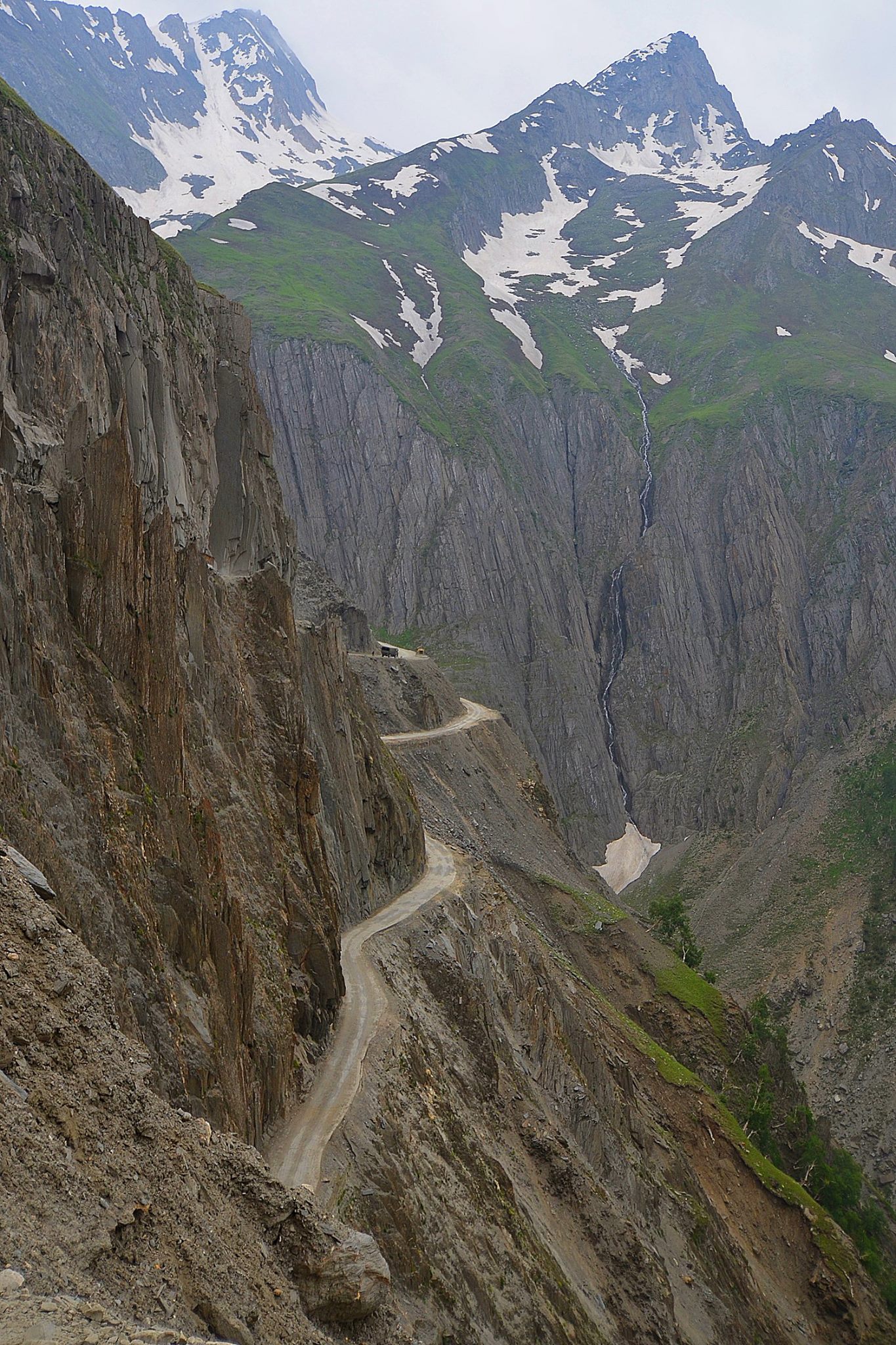
Where the Road Thins into Sky: Ten Passes That Teach Ladakh By Sidonie Morel There is a habit, when people speak of Ladakh, to reduce it to a single image: a high valley, a pale river, a monastery held to a cliff like a barnacle. But Ladakh is also a sequence of crossings. Not metaphors—actual saddles of land where the road narrows, the surface changes, the wind finds a different angle, and a day’s plan can be rewritten by cloud and grit. This roadbook of ten mountain passes is not a list for bragging rights. It is a way to understand the region as it is experienced on the ground: by drivers and mechanics, by families with sacks of provisions, by small convoys edging past each other, by travellers who learn—often quickly—that altitude is not an idea but a condition. The details that follow come from the texture of real journeys: the Srinagar–Leh road with its long middle, the open spine toward Nubra and Pangong, the Manali–Leh line with its clustered high crossings, the slower gate into Zanskar, and a far-eastern climb where permits, borders, and physiology set the terms. If you read carefully, you will notice that the most important information is rarely announced. It appears in practical gestures: a driver loosening his grip to rest his forearms; a passenger sipping water without thirst because headache is easier to prevent than to cure; a queue of vehicles waiting for a landslide to be cleared; a tea stall’s kettle kept on because cold returns the moment you stop moving. Arriving by a Narrow Door: Zoji La The first squeeze of the mountains—traffic, rockfall, and that sudden hush after the last pine Zoji La is often described as an entrance, and it is, but not in any ceremonial way. The approach can feel like ordinary travel—green slopes, trees, roadside life—until the road begins to tighten and you find yourself paying attention to details you usually ignore: the width of a shoulder, the quality of gravel under tyres, the distance between your mirror and the cliff. It is a pass where traffic is part of the landscape. Trucks, taxis, tourist vehicles, and army movement share a corridor that is not interested in accommodating impatience. Here, the mountain announces itself through interruptions. A line of vehicles may sit for half an hour because a section ahead is being scraped clear of debris. Dust hangs in the air with its dry metallic taste. Someone gets out to stretch, then sits back inside because the wind is sharper than expected. At times the pass feels less like a point on a map and more like a working zone: men with shovels, machinery, a hand raised to stop you, a wave to send you on. On days when the surface is rutted or wet, speed becomes irrelevant. The pass tells you what the pace will be. For European readers used to alpine passes with guardrails and neat signage, Zoji La’s lesson is simple: this is a road that exists because it is maintained continuously, not because it is naturally friendly. The best approach is not courage but composure. Keep windows up when convoys kick up dust; keep a scarf or mask accessible; accept that you may arrive later than you imagined. Between Kashmir’s green and Ladakh’s dust: how the air changes before you notice it Once you cross the crest, the shift is not theatrical, but it is unmistakable. The vegetation thins, then steps back. The air becomes drier; the light is less filtered. A jacket that felt unnecessary an hour ago becomes useful the moment the vehicle stops. You may notice that your lips dry faster, that you reach for water without being prompted by heat. In the villages that follow on the Ladakh side, the buildings and road-edge details begin to look different: flatter roofs, stonework, walls that seem designed for wind rather than rain. Zoji La also sets the tone for the next days of travel. It gives you a first encounter with the essential Ladakh equation: distance plus altitude plus road conditions. A journey of a few hundred kilometres can take far longer than expected, not because anyone is incompetent, but because the terrain refuses uniform speed. It is worth arriving with a mindset prepared for pauses—unplanned ones, and the planned ones you should take for your own body. If you are coming from Europe and your first night is in Kargil or further on, consider how you handle the transition. Eat lightly. Let the first evening be quiet. If you tend to headaches, do not wait for one to appear before you change your habits: drink steadily, avoid alcohol, and sleep early. Zoji La is only the first door; Ladakh is full of thresholds, and the best travel is the kind that lets your system adjust rather than protest. The Highway of Long Breaths: Namika La & Fotu La Namika La—wind that smells of stone, and the sense of leaving softness behind On the Srinagar–Leh route, the road begins to develop a particular rhythm: long stretches of forward motion punctuated by moments where the landscape seems to tighten into a decision. Namika La is one of those moments. It is not always the most talked-about pass, which is precisely why it belongs in a serious roadbook. It is a crossing you experience as part of a day that includes many small adjustments: the driver choosing a line through uneven patches, passengers shifting to relieve pressure points, someone opening a packet of biscuits because appetite can vanish at altitude. The wind on these passes is specific. It is not the soft breeze of a coastal holiday. It is dry, thin, and direct, and it carries the smell of crushed stone and dust heated by sun. When you stop for a photograph, you quickly learn the practical side of this wind: it steals warmth from your hands; it turns your eyes watery; it reminds you to keep a hat secured because a loose cap can become rubbish in seconds. If prayer flags are present, you can see the force in how they snap and strain rather than flutter. Namika La also shows how Ladakh contains multiple climates within a day. You might have started in milder air, and by midday you are in something cleaner and harder. If you travel with older family members, or anyone prone to nausea, this is a good point to slow down and watch for signs: unusual fatigue, dizziness, irritation that does not match the conversation. The pass is not a test; it is a reminder to travel in a way that leaves room for the body’s timing. Fotu La—flags and ridgelines, the road curving like a thought you can’t quite finish Fotu La is often remembered for its altitude and for the view it offers into the surrounding folds. But what stays with you on the ground is more prosaic: the way the ridges arrange themselves, one behind another, in a sequence that makes distance look layered rather than flat. The road may be in better condition on some days and rough on others; the point is not the surface itself but how quickly it can change. This is where you begin to understand why local drivers carry spares and why they do not treat a puncture as a catastrophe but as part of the day. At Fotu La, the air can be bright enough to feel almost clinical. Shadows are sharp. If you take off gloves to operate a phone camera, your fingertips cool rapidly. On clear days you can see the geometry of the terrain: slopes that look like they were scraped by a giant rake, lines of stone that read as old riverbeds, pale patches that might be salt or scree. In such light, the human additions—road signs, small structures, flags—look temporary. Not fragile, exactly, but provisional. In practical terms, Fotu La is a useful place to refine your habits. Eat small amounts. Move slowly when you step out of the car. Keep layers accessible rather than packed. If you have travelled in high regions before, you may be tempted to treat this as routine. Resist that urge. The cumulative effect of altitude is often more important than any single dramatic moment, and Fotu La sits in that long middle where people overestimate their resilience because nothing obviously bad has happened yet. Roadside pauses: tea, repair crews, and the small choreography of passing on a thin lane Between Namika La and Fotu La, and in the stretches that lead to them, the Srinagar–Leh road teaches another lesson: travel here is collaborative. A truck yields because it must, not because it is polite. A driver edges toward a shoulder that barely exists to create space for an oncoming vehicle. When road workers have a section reduced to a single lane, everyone accepts the hand signal and waits. You begin to notice the choreography: vehicles arranged by size, people stepping out with hands in pockets, one person taking responsibility for directing a small cluster through a narrow point. Tea stalls appear at intervals, sometimes simple enough to feel like an extension of a household: kettle, cups, a tin of biscuits, a cloth used as both towel and potholder. The warmth is immediate, and not just from temperature. The pause itself matters. Sitting for ten minutes with a hot cup can change how you feel for the next hour. It also gives you a chance to see the road from another angle: to watch a convoy pass, to see how quickly dust settles, to hear the hard clack of stones under tyres. If you are travelling with children or anyone anxious about heights, these pauses are not optional luxuries. They are tools. They allow the nervous system to reset. They also reduce the temptation to treat the journey as something to “get through.” Ladakh’s passes are not scenery outside a window; they are the structure that holds the region together, and you travel better when you let the road set a humane pace. Two Famous Names, Two Different Silences: Khardung La & Chang La Khardung La—Nubra’s threshold, where excitement fights the headache Khardung La is one of those names that appears early in people’s dreams of Ladakh. It is often spoken of as a milestone, and for many travellers it is. Yet the pass itself, in real life, is not an empty summit waiting for applause. It is a wor
source https://lifeontheplanetladakh.com/blog/ladakh-mountain-passes-roadbook/


Comments
Post a Comment